Sunday, 15 July 2012
Blood C - Review
Wednesday, 11 July 2012
Loveless - Review
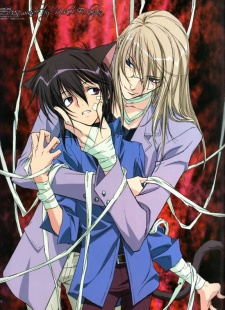
From the point of view of a guarded Western, Japanese sensibility towards paedophilia and incest (predominately sibling incest) is almost akin to entering another world. The subsequent expression of idealistic and erotic ‘beautiful boys in love’ is known as the Shonen-ai (boy-love) genre. Loveless is one such confusing and uncomfortable anime, introducing a potentially paedophilic relationship between protagonists Ritsuka (12 years old) and Sobi (21 years old). This certainly raises the issue of appropriateness (not to mention several hairs on the back of my neck). Nevertheless Loveless is primarily concerned with the loss of innocence in the symbolic sense rather than the physical.
Wednesday, 30 May 2012
Dantalian no Shoka - Review
Friday, 20 April 2012
Ao No Exorcist Review

Developed from Dragonball, the shounen formula is a fairly consistent style of anime, considering the most well-known and popular shows tend to adhere to pattern – Naruto and Bleach for example. This is not without its drawback. Shounen animes (fighting ones in particular) are often long and overtly drawn out, having fighting sequences that can span for multi-episodes, which is especially tedious if they are unimportant to the major storyline, for instance a secondary or even a third-rate character fighting an inconsequential side villain. Not to mention the tedious and endless filler arcs.
Ao no Exorcist is not a radical leap from the shounen formula, not by any stretch of the imagination, in particular if you address the similarities between it and Bleach (which I will later on). Nevertheless there are several remarkable improvements to the tried and test formula. The most prominent is reduction of long-winded fighting scenes. Aside from the big bad square off during the final three episodes, most action is tamed to one or two episode parters and fights do not exceed themselves needlessly. Ultimately this means the audiences is not overloaded with violence, deterring away from the plot, which results in genuine tension since we are invested in the characters. As much as I like Bleach and Dragonball, Ichigo and Goku are fairly bland archetypal protagonists. Right from the get go we know if beaten both will eventually return stronger, even if killed (in the case of Goku).
A shorter, more concise series is beneficial to the filler episodes as well. Since in Ao no Exorcist these are singular, stand-alone episodes and therefore don’t come across forced. It’s actually pretty favourable to observe characters during their ‘off-days’, despite the limited use of the school backdrop. It really was a shame that the anime didn’t make full use of the school outside of the Exorcist classes. Of course this is comparable to Bleach and Dragonball, where the protagonists often leap from one epic adventure straight into another, living filler episodes (as mentioned prior) empty and forced comic-relief. Take the impending epic battle between Cell and instead of training Goku’s wife decides she wants him and his green alien training buddy Piccolo to learn how to drive. Really? I mean is that even a priority? It just seems so silly and out of place.
Onto the tropes! Unfortunately in the character department Ao no Exorcist does not excel, since it opts out for the safe approach. We have our main character, Rin, the son of Satan and like most protagonists, his birth right feels like the weight of the world on his shoulders. Nicely this is even pointed out plenty of times since Rin is often running head first into danger on his own. This is in part due to his heritage the need for secrecy but is a habit Rin finds hard to break. In comparison Ichigo (Bleach) has actually very little reason to the main protagonist. He only gets involved with the conflict after his two potential love interests are kidnapped, yet that seems enough to declare Aizen his enemy and take on the responsibility of stopping him. Whereas Rin’s reasoning is much more simplistic and holds more realism. Satan killed his father, Rin want’s revenge. It’s no wonder vengeance is such a high motivator; it effectively brings the conflict to a more personal level.
The secondary characters are where things don’t quite gel. We have the rival archetype Ryuji, doubling as potential love interest and healer archetypes Shiemi, the smart but haughty girl archetype Izumo, the shamelessly big chested-little clothing teacher archetype Shura (more common than you think, the good guy on the wrong side archetype Arthur August Angel and the mysterious, has additional motives archetypes Mephisto. While most of them are pretty harmless and even do a good job upholding their stereotype, others are woefully grating and just extend into plot devise territory – take Arthur August Angel as an prime example.
What gives Ao no Exorcist a real boost is the additional of Rin’s twin brother, Yukio. This enables the plot to reduce the pressure placed on Rin as primary protagonist and even at the end have a more balanced resolution. By getting rid of this lone-wolf complex, the anime enables a brotherly bond to be beautifully created and developed over time. There are one or two hiccups along the way, the sudden jerk as Yukio rapidly changes character feels a little stiff but this is quickly turned around.
On the disappointing side, the main villain was a colossal let down. The series spend a good deal of time introducing Satan as a bad arse and portraying him as a major player, then suddenly right at the end we received some crucial information that is supposed to flesh out the character from standard bad guy archetype – he’s got a I’m so lonely, I just want to be loved side. It doesn’t work, primarily because it flat out contradicts not just the original premise of the character but also their immediate actions. Making your character do a complete 180 is not adding depth.
Despite the ups and downs, Ao no Exorcist is a very strong show and has potential to be next big shounen anime. Alas there seems no secondary season in sight, through a movie is in the works. Perhaps this is for the best, let the manga develop first than have a second season. No filler seasons!
Rating: 8/10
Wednesday, 6 July 2011
Ano Hi Mita Hana no Namae o Boku-Tachi wa Mada Shiranai Review
Animes like We Still Don’t Know the Name of the Flower We Saw That Day, neatly nicknamed Anohana for short, are rare to come by. Wrapping up this month after a mere eleven perennial episodes, Anohana is fairly short but definitely sweet, remaining on the mark for the entirely of its run. It was smooth sailing for the most part with a couple of hiccups along the way, in particular the melodramatic minor characters, however strong planning and execution gave the show a greater purpose, more compelling then the sum of its parts.
The storyline focused on the complex relationship between five childhood friends who have drifted apart three years prior after the death of their sixth member, Meiko ‘Menma’ Honma. The primary protagonist, Jinta ‘Jintan’ Yadomi, the group’s former leader, now social recluse, is the only person able to see or communicate with Menma of whom he initially dismisses as a hallucination, a manifestation of his guilt. The relationship between Jintan and ghost girl Menma is both moe-humorous and deeply troubled at the same time, as Jintan struggles to come to terms with the supernatural return of his former friend. In essence Anohana is a coming-of-age drama, which has its characters enthralled with typical teenage dilemmas such as unrequited crushes, depleting friendship circles and social alienation, all the while having to deal with significant childhood trauma.
Anohana not only crafts great chemistry between Jintan and Menma, but also amongst the other four side characters, Anaru, Tsuruko, Yukiatsu and Poppo. The characterization is nothing short of wonderful, each teenager depiction is detailed and trendsetting, while primarily consisting of angst-ridden teenagers, and none come across as annoying, whiny or vastly unlikable. I’m almost impressed. This has to be a first. A primary strength of Anohana is that each character faces their own brand of grief which transpires into very different reactions. It explores the many ways that grief can be felt or expressed through physical escapism, falling in with the wrong crowd to irrational feelings of jealousy and resentment.
Nevertheless this tactic is not without its flaws. Whereas some characters are subtle and realistic in their anguish, others are overplayed. None more so then cross-dressing Yukiatsu, who’s youthful love for Menma drives him to impersonate her, white dress and all. You’ve seriously got to question how sincerely a child can not only comprehend an intricate emotion such as love but also hold a flame indisputably for three years. On the other hand Tsuruko was severely downplayed, while she remained the most ‘together’ member of the group, I couldn’t help but find her primary reason – the unreciprocated crush aspect, rather disappointing since it was already relevant to Anaru.
As a whole Anohana is a fine example of how well simplicity and innovation can bounce off each other under firm direction. The anime might have ended with one of the more emotionally charged climaxes this season, but it didn’t come as wholly unexpected, given the flow of the series. Reconciliation of the group was the ultimate goal, despite the obvious the series reframed from becoming sloppy or derived, and managed to pull of a touching and exceptional finale. Excellent series and highly recommended.
Rating: 8.5/10
Tuesday, 3 May 2011
Ao No Exorcist 03 – Brothers
Through it was nice to see the physically weaker one not walking in his elders’ shadow, I don’t buy genius/exorcist teacher for one second. It was a nice attempt to make Yukio seem more badass, I suppose that is the purpose of a shounen.
Verdict: Good
Wednesday, 27 April 2011
Ao No Exorcist 02 – Gehenna Gate
Potential baddie Mephisto Pheles (name and appearance alone scream demon) is introduced after the credits, with the intention of killing Rin for the sake of humanity. However inexpiably changes his mind after Rin expresses his goal to become an exorcist and kill Satan, talk about setting his sights high. Seriously Mephisto (through I don’t think those two terms go well together) that would be the dumbest move a person in your position could make, if you didn’t have an ulterior motive.
Nevertheless this is still enjoyable.
Verdict: Good
Saturday, 9 April 2011
Yumekui Merry - Review
It introduced two likable protagonists, both troubled with personal dilemmas. Merry Nightmare is a dream demon who exists in reality without a human vessel and human Yumeji is being hunted by dream demon Chaser John Doe, events which bring the two together. But the coincidences don’t end there. Yumeji has the ability to see the auras, an ability he discovered ten years ago around the same time Merry Nightmare became trapped in the human world. Which just begs the questions, how are these two incidents related? How are Merry and Yumeji related? Yet neither of which are answered or even explored, and here is where the downfall of Yumekui Merry occurs.
For some reason there isn’t enough material to work with and the anime has been left to cook up a filler story line in order to conclude the first season. Bottom line is by doing so the show lacks direction and consistency. A prime example of this concerns the series villain or lack thereof. In the beginning we are introduced to Chaser John Doe and his clear intention to make Yumeji his human vessel. Not only does this goal get abandoned, Chaser John Doe drops right out of the anime. Next a more allusive, major villain appears, but only long enough to cackle at some grand master scheme that the heroes remain in the dark about. As the anime draws to a close, the heroes are still unaware of his existence. Presumably here is where the original manga story ends and the filler anime story is force feed. Enter the third villain, Mistletein, a character with no real purpose, no depths and no bearing on the bigger picture. Not to mention not well thought through. A large portion of the second half is spent focusing on how unbeatable Mistletein is that the writers actually end up writing themselves into a corner. The only way out are a couple of unbearable deus-ex-machine moments, that only served to disappoint.
To its credit at least Yumekui Merry tried to solve this fiasco without resorting to fan-service or cheap gags in order to pass the time. As filler villains go, Mistletein fitted in quite comfortably with the imaginative side of the show, even her motive of bad for the sake of being bad could have easily been overlooked if the anime had been extend so as not to close with her. The nail on the head is Yumekui Merry should have been longer. Ultimately despite all the potential, the characters remain exactly where they started, they have no more knowledge about why Merry is in the human world, why Yumeji can see auras, their connection, or heck even dream demons in general. This is not an ending, it’s a midway point and Yumekui Merry needs to be picked up for a second season badly.
Rating: 6/10
Monday, 14 February 2011
First Impressions: Seikon no Qwaser

Let’s start with the positives. Despite evidence to the contrary, Seikon no Qwaser is not a simple fan service anime, there is a decent enough storyline to make for a solid action series. You have your good guys and your bad guys both trying to get their hands on a holy icon – the Theotokos of Tsarytin. Both organisations have superpowers, namely the ability to control certain elements, which makes for some visually pleasing amounts of violence. Enter the main character, Oribe Mafuyu, quite a sound heroine to be honest. She isn’t a dainty princess, or an inept bint, that position having been already filled by Yamanobe Tomo, the worse character in the show, or indeed devised. Mafuyu is the shows down-to-earth character (in all regards) and they’ve done a satisfactory job.
And now the inevitable negative. It’s almost as if the creators knew the plot was not a particularly original one and decided to give it a ‘sexy’ edge (I’m using that term lightly). The fighters gain their abilities from drinking a substance known as soma, aka breast milk. Let that just sink in for a moment. Yup, every shred of credibly was just pissed away. No matter how good the show is, or could be, this cringe worthy oversight will always be the main focus. Sasha’s chauvinistic side pretty much sums up how dumb this concept is when he tells Tomo to be proud of her breasts. Uh huh, okay thanks for that, just remember to constantly make eye contact, Sasha.
At the moment I can tolerate the predictable fan service, maybe it’s because I have the cut version, or maybe its not as bad as other reviewers have lead me to believe. Well, fingers crossed I can make it to the end. In other words, don’t let the fan service get worse!
Edit: It got worse. Dropped.
Friday, 7 January 2011
Otome Youkai Zakuro - Review

Monday, 3 January 2011
Shiki - Review

Wednesday, 29 December 2010
Black Butler II Review

Once again, its the supporting cast that truly brings Kuroshitsuji to life. Satisfactory amounts of homo reaper, Grell Sutcliffe are more than enough to meet my seal of approval. Observing his infatuation with Sebastian progress into a potential friendship, based on Grell's inclusion in the goodbye ceremony at the end of episode 12 would seem to imply that he is no longer considered just a nuisance, was simply hilarious. Sometimes all it takes is one well crafted comic relief character to break up an otherwise starchy show.
The finale delivered a wonderfully fiendish twist, executed superbly against the ever present foreboding peril of which Ciel places himself in. Much more captivating and consistent than its predecessor and nicely leaves the door wide open for a third season. I'm sold on this show so fingers crossed there will be one.
6.5/10
Thursday, 16 December 2010
Occult Academy Review