Showing posts with label Genre: Mystery. Show all posts

Monday, 9 September 2013

Kamisama no Memochou (Heaven’s Memo Pad)


Returning to Kamisama no Memochou after several months’ hiatus, was a tad surprising. Surprising in a good way, in that the anime had had any sort of lasting impression. That’s not to say that Heaven’s Memo Pad is by any means a bad or even an uninspired anime. Quite the opposite in fact. Especially consider the rather tired and overused premise it has to work with. Hmm, I wonder it that could be part of the problem. In short, I was not expecting Kamisama no Memochou to turn out to be good and memorable at the same time.

As mentioned prior, it’s the premise that is the shows ultimate chink in its armour. Moe-detective and generic-male assistant solve crimes! Oh and the moe-detective has an English name. And she’s supposed to be super adorable but it translates as arrogant and annoying. And the male is bland. And he has a love interest. Who is also bland. It’s insipid and it’s been done to death! Comparing this momentarily with its more recent predecessor Gosick, on the surface neither anime has differs substantially in terms of concept. But whereas Gosick puts very little thought into its individual mysteries, or developing the relationship between the two protagonists, instead opting to be entertaining as oppose to thought-provoking. Kamisama no Memochou takes the same premise and actually turns it into something good. And the title makes more sense than ‘Gosick’.

The series complies several murder mysteries (and a baseball game) into 12 episodes. The length of each mystery varies between two to four episodes. Each one is beautifully written and delivered, with an unexpected amount of substance attached. Perhaps the most heart-wrenchingly touching is the final story arc, since it centres on the attempted suicide of a pivotal cast member. And it doesn’t get an easy wrap-up. None of the mysteries do because some moments in life are just that complicated and joyless. And solving the mystery doesn’t change the course of events, ultimately it doesn’t rewrite the wrong. There are no easy answers and Kamisama no Memochou does an excellent job of phoning that in. In that, it is a thoroughly satisfying work of art.


Protagonists Narumi Fujishima and Alice are stereotypical sure, but not so rigid. Narumi is not the typical saintly male lead as often is portrayed. Naïve yes, but also all too human in some places, in particular the final storyline which deals a fair amount of crap his way. Alice probably gets the rawest deal as her character never truly grows. Still, she never crosses over to full on annoying and her powers of deduction remain consistent. She is smart but not omniscient. The remaining supporting cast do an outstanding job of being both contrived and interesting. They tend not to play on their stereotypes, offering layers and more dynamicity. Interestingly, while the cast as a whole is more subdued, they don’t come across as dull or one-dimensional. They come across as real people.

In all, Kamisama no Memochou is refreshing. It’s intelligently written and executed, the characters are well-rounded and likeable, and it is capable of producing genuine emotion (especially during the final storyline). It’s a pity that the show only made 12 episodes…


Rating: 8/10 

Sunday, 15 July 2012

Blood C - Review


Blood C is supposedly the latest spin-off of the prominent Blood franchise – Blood: The Last Vampire, Blood+ and Blood: The Last Vampire live action, rather than an actual continuation. Really it’s little more than an alternative rendition of the Blood universe with only the title character in common. Just in name mind you. Based on this premise alone, Blood C is the kind of anime that will be loved or loathed depending on how well acquainted fans are with the Blood franchise. Having watched a good portion of Blood+, I’m not overly impressed with this little stand-alone slasher flick.  
                                                        
Saya Kisaragi (Otonashi in Blood+) is portrayed as the trademark kind-hearted, likable but clumsy schoolgirl who moonlights as a Furukimono (giant, non-descriptive, man-eating monsters) slayer. However not content with the drastic alteration of her personality in order to shoehorn the generic shojo heroine prototype – granted there is at least an explanation given, Blood C radially changes the character’s physical appearance. Whereas Saya Otonashi was simple, sleek and lifelike, Saya Kisaragi is a kawaii overload of implausibility. And with character 180, comes the redesign of the iconic image of the blue sailor uniformed girl wielding a katana. In Blood C, Saya supports a red and black school uniform with a chain (I kid you not) around the collar. This is pretty fucking stupid. Blood is a franchise about vampires, there is absolutely no need to ‘Goth-up’ the heroine in such a blatant manner. With hindsight it starts to become clear that the writer started out with this image of a gothic schoolgirl hunting monsters with a katana and decided to slap the name Blood onto it to attract a wider fan base. In case you’re wondering Blood: The Last Vampire, Blood+ and Blood C were all written by different people. I think this adds weight to my theory.

To the shows credit, Blood C panders to a different kind of horror, specifically the gory violent kind. Which does start off surprisingly well, as one by one her friends, classmates and even general bystanders are all brutality murdered right before a helpless Saya. This ability to create a sense of suspense and peril is perhaps the best aspect of Blood C. Unfortunately the effect is quickly diminished by how routine the attacks become. Monsters show up around Saya, Saya vows to protect her friends, her friends die and only then does Saya go batshit and kill the monster. When we reach the school battle, the charm is somewhat lost since we know Saya is capable of killing the monster but only after she has witnessed her friends die gruesomely. Once we’ve reach this point, the gory factor just seems superficial.

As for the twist ending, it creates more questions than answers. While the initial notion of trying to change Saya’s personality to see what characteristics are innate, is an interesting idea and I imagine could be a good story if handled better, it just raises the question of why? What is the villain’s motivation? What does he actually gain? I mean aside from screwing with Saya and producing a massive body count? The final battle is one of the most gratuitous and pointless sequences I have ever seen. How is slaughtering an entire village not going to attract mass attention? And why do it anyway? Oh yeah right, “evil”. I keep forgetting.

However the underlying problem with Blood C is that there is very little backstory and the audience is never privy to the true Saya since her entire performance was a farce. Even to the extent that the audience never learns what Saya is – a vampire hybrid. This is problematic since the anime attempts to stand on its own and that would probably have been for the best. Nevertheless it can’t even manage that since Blood C requires at least some background knowledge for the audience to have a clue what is going on half the time. In particular there are references made to Saya’s monstrous true nature, something that is never explicitly shown and so there is never a chance to be invested. If we never see the monster Saya, how do we know Saya Kisaragi isn’t the real Saya?

In short Blood C would have flare much better if it had dropped the pretence of being a Blood spin-off and just accept being a Blood knock-off.

Rating: 5/10  

For fans of: Highschool of the dead

Wednesday, 11 July 2012

Loveless - Review


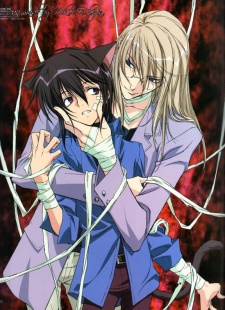
From the point of view of a guarded Western, Japanese sensibility towards paedophilia and incest (predominately sibling incest) is almost akin to entering another world. The subsequent expression of idealistic and erotic ‘beautiful boys in love’ is known as the Shonen-ai (boy-love) genre. Loveless is one such confusing and uncomfortable anime, introducing a potentially paedophilic relationship between protagonists Ritsuka (12 years old) and Sobi (21 years old). This certainly raises the issue of appropriateness (not to mention several hairs on the back of my neck). Nevertheless Loveless is primarily concerned with the loss of innocence in the symbolic sense rather than the physical.

Ritsuka comes from a troubled background. His elder brother Seimei was recently and horrifically murdered, his personality has radically changed, and he suffers memory loss and has an abusive mother steadily becoming unhinged to the point of denouncing Ritsuka as her son. This leads Ritsuka to experience insomnia and social anxieties that require him to meet with a therapist. This is a rather excellent rendition of grief and family turmoil after a significant loss. Having a child come to terms with the reality of death is perhaps the most traditional but also momentous method of losing the innocence of childhood. Loveless is largely concerned with reintegrating Ritsuka, with his growth and self-discovery.

Sexuality and intimacy are subservient but imperative themes. Loveless takes place in an alternative world, inhabited by kemonomini- humans possessing cat-like features (ears and tails) as an open display of their virginity. These features will be lost after their first sexual encounter, acting as a visual separation between adults and children. With regards to the relationship between Ritsuka and Sobi, there is an element of mentorship rather than lover (keeping with the tradition of which this springs from). Sobi’s love for Ritsuka does not come from genuine desire or attraction. Instead it is the express command of his former master Seimei. In this way we can view Sobi as a surrogate brother, an anchor of support rather than a sexual predator (sort of). Though Sobi is portrayed as non-threatening, it’s hard to get around his most inappropriate actions such as outright kissing Ritsuka.

The storyline is one that is intrinsically complicated. On the one hand there are some great fantasy elements with the notion of true names binding people (typically same-sex couples) as fighters and sacrifices (soul-mates in effect) and are trained at a secret school to do battle with one another. While this might give the impression of a rich, multi-layered concept, it should be made clear that none of these elements are nearly fleshed out enough to be satisfactory. This is certainly understandable considering that the manga had only published four volumes at the time the anime was released. Still it does limit the overall enjoyment as Loveless never reaches a gratifying conclusion of any kind. To make matters worse the last episode reveals a shocking revelation regarding the death of Seimei. Needless to say this is a tad frustrating.

Regardless there is something about Loveless, something beautiful, something captivating that will mesmerize its audience and make them want to learn more about this strange little world. Well, so long as they can overlook the creep factor.

Rating: 7/10

For Fans of: Kuroshitsuji, Gravitation, Yami no Matsuei 

Wednesday, 30 May 2012

Dantalian no Shoka - Review


I have to admit, this one was a bit of a doozie.

Dantalian no Shoka or alternatively Bibliotheca Mystica de Dantalian (The Mystic Archives of Dantalian) is certainly a peculiar one. At a mere twelve episodes the series is pretty easy-going and fits nice and tidily into the Victorian/Edwardian mystery niche that the Japanese are so fond of. On the other hand, it’s lazy and unsubstantial. It seems to almost pander to said niche rather than seeking expansion or development. And there are plenty of animes that handle this cliché better and manage to have a resolution.

Set in England after the First World War, Hugh “Huey” Antony Disward (voiced by none other than the black butler himself, Daisuke One) inherits his grandfather’s massive estate and underage demon/doll/library-girl, Dalian as well. The plot focuses on the duo as they recover phantom books, objects which offer the reader non-specific magic powers. As an episodic series, Dantalian no Shoka is entertaining enough, through the initial premise – Dalian is a library – is never actually explored or explained. It’s just accepted. Much like Huey and his new role through he really has no obligation to. And yet at no point does Huey display any resistance nor does he ever question Dalian regarding her origins or how her powers work. He just accepts it, which is not how a normal human being would behaviour but there you go. This is a prime example of poor character construction. Sure Huey can get shot in the stomach, bleed out, get up and carry Dalian as he jumps out of window then run away from a pack of hungry zombies but ultimately does that give him a personality? Nope. It just makes him a bland, one dimensional hero archetype. Needless to say Dalian’s character or lack thereof isn’t any better.

Admittedly Dantalian no Shoka reminds me a lot of Gosick – same time period, same moe-girl and older guy couple, same preliminary mystery premise, same sleek animation. It actually surprised me that the two were not made by the same company. Ironically what wore thin with Gosick is what gives Dantalian no Shoka its strength and vice versa. For example whereas Gosick didn’t work as an episodic series and the bigger picture was much more interesting, it’s quite the reverse for Dantalian no Shoka, which seemed content to shoehorn something resembling a main storyline very last minute and I do mean last episode last minute. The effect was pretty disastrous. It felt rushed, half-hearted and completely unintended, like the producers had planned for a longer run but ended up stopping mid-point just as something new and exciting was occurring. Ultimately this pulled the series down.

Rating: 6 /10

For fans of: Black Butler, Gosick, Rozen Maiden 

Monday, 21 May 2012

Mawaru Penguindrum - Review


There are animes, there are art forms and then there is Kunihiko Ikuhara, the director of iconic magical girl animes Sailor Moon and Revolutionary Girl Utena. Evidently Ikuhara is well versed in cookie-cutter shows as well as breath-taking breaking the mould shows. So you’ll either get exactly what you want or exactly what you didn’t expect. Nevertheless both Sailor Moon and Revolutionary Girl Utena deal with a similar platform (not to mention virtually identical animation); Mawaru Penguindrum takes a fresh and entirely different approach. The concept is a little hard to pin down as the genre(s) is less shojo-romance and more mystery/comedy/sci-fi. And there are penguins. Lots of penguins.

The series centres on three siblings, twins Shouma and Kanba and their terminally ill younger sister, Himari. Initially Himari dies but is immediately reanimated into a penguin princess during one of the most spectacular magical girl transformations I’ve ever witnessed. The new and improved Himari demands a penguindrum in exchange for their sister’s new found health. What is a penguindrum? The princess doesn’t say, nor do we really find out until the very last episode and even then it’s still a little ambiguous.

The characters are all first rate. It’s near impossible to dislike any of them. Shouma and Kanba serve as superb protagonists, challenged with the heart-wrenching task of trying to save a loved one, a task that eventually leads them apart and seeking conflicting paths. Himari appears cute as a button one moment, than high-and-mighty princess the next, both roles are electrifying. One potential problem is the incest, fortunately that is resolved in the most satisfying conclusion, it’s not incest (major spoilers). Even Ringo, who is principally introduced as an annoying, single-minded stalker, has such stark revelations about her past, that the character is renovated into someone relatable and ultimately likable.

Mawaru Penguindrum is very much a character study in the sense that all of the primary cast have a rough upbringing and are in some way scarred, allowing for plenty of growth and development. One minor setback of the traumatic childhood is the over use of the lonely/abandoned child complex. This leads to great effect in some situations, namely the horrendous child broiler scenes which really work to drive home that there is something underlying evil with this society and not so much in others, chiefly the Masako storyline. Despite what I said early, this is one character that we didn’t get to see utilized to her full potential. She and her brother Mario were mostly padding for a shocking plot twist. Interesting enough, but perhaps not quite on par with the rest of the cast.

The storyline is impeccably well-crafted. From the outset, this is set up to be a tragedy. The beginning is (naturally) deceptive as the light-hearted, whimsical romantic-comedy element is gradually lost and replaced with a much colder ascetic. Mawaru Penguindrum is also a masterpiece of symbolism and surrealism that will certainly require several views in order to soak up all the references. Clearly nothing has been left to chance, or fate as is more relevant.

Mawaru Penguindrum is nothing short of magnificent. The sheer level of depth, of detail that has gone into the shows meticulous design is quite frankly staggering and the outcome is simply flawless. The devotion of the siblings as the core motivator is pretty powerful and the ending is incredibly satisfactory if a little open ended. Kunihiko Ikuhara is a true visionary and hopefully this will be the shape of more things to come from this wonderfully talented director.

Rating: 9/10
Recommended. 

Sunday, 13 May 2012

Tiger and Bunny Review


The core concept behind Tiger and Bunny isn’t exactly new and/or original. The superhero as a celebrity aspect has been paraded around before, most notably in the Iron Man films. Tiger and Bunny simply takes this to the next conceivable consumer level, the superhero as a reality TV star. As a self-confessed marvel geek, this very notion is contradictory to what constitutes as a hero, which is a well-held running theme. What is so controversial about this premise is the notion that the superheroes fight crime in order to win brownie points as oppose to their personal sense of moral justice. In fact the only character that really maintains old skool hero values is our primary protagonist, Tiger which initially results in his low ranking and often become more of a hindrance.

The secondary protagonist, Bunny has a tragic backstory more in keeping with the classic superhero roots, pretty blatantly a Batman rip. Fortunately the writers have the good sense to spin a new angle and make the character mainly concerned with solving his parents’ murder as oppose to becoming a vigilante. However we don’t learn much about the other heroes and when we do it often exposes their all too human motivations, pressure from parents, wanting to stand out or in the case of Blue Rose, wanting to become a teen idol. In the long run it renders the characters human and flawed, which is not what heroes are supposed to represent. Yet by grounding them in a sense of reality, it actually gives them a greater depth rather than having them portrayed as saints taking on societies responsibilities just because they were born with super powers.

Having said that there are a few minor hiccups, the most notable is in regards to Tiger and his conflict as both superhero and single father. While it’s a nice twist to have a single father superhero, in this particular anime which re-writes the superhero genre, it’s never really explained why this division is necessary. Since his identity is kept secret and the rest of his immediate family already know, why hide it from his pre-teen daughter? Doesn’t he want her know? Wouldn’t that make his life easier? Wouldn’t she be more sympathetic with his absentee parenting? Or he could just quit and raise his child full time, which should actually take priority. In all it seems too contrived and too forced, not to mention almost out of context with the show.

What really intrigued me about this show was the collaboration between cultures. The notion of the superhero, the overt commercialization and especially the setting right down to the dollar currency system are grounded in western ideologies. Even the genesis of the superheroes has a lot in common with another popular American franchise, the X-Men. Yet later on when Tiger leaves to visit his daughter we’re transported to a rural Japanese backdrop. This element of harmony is made none the more clearer than between the two protagonists, Tiger is obviously Japanese and Bunny is western, presumably American. Interestingly there is a similar congruence with the futuristic technological advances whilst being set in 1978 (according to the Christmas clock). Overall this blend mingled well with the plot, adding an extra creative boost along the way.

As everyone should know, every good superhero requires a nemesis. While Tiger and Bunny did deliver a big bad towards the end of the series both with an unexpected twist and the potential for a much greater threat, this paled in comparison to the anti-hero, Lunatic. The character was introduced in small intervals allowing the audience to connect the dots while the protagonists remain blissfully unaware. It was almost a shame that Lunatic wasn’t utilized more.  Still, there is plenty of room for a follow up series and even talk of a movie.

Rating: 8.5/10


Tuesday, 6 September 2011

Gosick - Review


Gosick finally draws to a close and still I don’t know what to make of it. The entire series inhibited a perpetual state of good moments succeeded by weak moments. The overall inability to remain constant – either good or bad, really let the show down as a whole. Gosick would have certainly benefited from a little more editing and a lot more sense-making! Chuck out the uninspired mush and condense the finer episodes and Gosick would have received a higher rating. Through that still would not have explained the show’s title – what exactly is ‘Gosick’?

In general Gosick lacked direction, seemingly unable to know what genre it was from the very get go. Initially we are introduced to an ‘unravelled the mystery’ plot, composed of a little light school drama and potential romance, before leaping full throttle into adventure, love triangles and the occult. The opening gambit was particularly substandard, the mystery element, lead by the main protagonist, the genius moe-detective Victorique was nothing short of disappointing due to the tiny detail that Victorique is not a genius, every other character is just remarkably dumb. The primary mysteries are ludicrously easy to solve that the only aspect to leaving the viewer in wonder, is whether or not the rest of the cast will cotton on. As the series progresses, the mysteries interweave and the bigger picture has a lot more too often, albeit a lot more convoluted activity.

Nevertheless the series did offer something worthwhile in the form of the oh-so-adorable Victorique. Wonderfully well written and superbly executed, Victorique more than carried the series, especially considering her supporting cast. Gosick fell into the trap of accompanying its leading lady with a hero completely void of a personality that his only faculty seemed to be screeching Victorique’s name at any given opportunity. Other than his ‘Japanese sense of honour’ Kujo has no real purpose to befriend Victorique nor is there any chemistry between them as heavily implied love interests. It’s a shame that within 24 episodes the writing staff was not able to develop this character is to someone vaguely three dimensional. There were nevertheless much more badly written and annoying characters throughout this series, all eggs were undoubtedly placed in the basket marked Victorique.


Rating: 6.5/10

Wednesday, 13 April 2011

Steins; Gates 02 – Paranoia of Time Leaps


Makise Kurisu returns from her premature grave to momentarily give Okarin the spooks, then to lecture him on the implausibility of time travel. Okay we have our sceptic. Alongside Kurisu, more of the female cast were brought to light, mainly through crossing paths with our male protagonist. Nevertheless none of these introductions felt forced or even out of place. Okarin had varying relationships with each new female character from first introductions, Amane Suzuha and Kiryuu Moeka, to friendship, Nyannyan Feiris, to unwanted crush, Urushibara Ruka. Personally the most intriguing meeting was Kiryuu Moeka, I’m not entirely certain the relevance of the rest, other then to flesh out the cast.

Next, the storyline continued to develop at leisure, carefully outlining the multi-universe theory, put forth by self-proclaimed time traveller, John Titor, but throws some mystery in for good measure. Literature on John Titor is suddenly vastly reduced, even Okarin’s personal collection is missing, and after making contact with the alleged time traveller, Okarin becomes aware that what he knew about Titor is no longer true in his reality. According to the many-worlds theory, does that mean Okarin stepped into another universe at the point of Makise’s death in the prior episode? Then again, how does Okarin remember? Surely the many-worlds theory only suggests that two conflicting universes can exist at the same time – one in which you die, one in which you survive? However I’m not ruling out that Okarin isn’t just a paranoid schizophrenic.

Verdict: Very Good.

Friday, 11 March 2011

Umineko no Naku Koro ni Review

Umineko no Naku Koro ni (When the Seagulls cry) is considered to be the third in the When They Cry series, through notably different from the previous two Higurashi No Naku Koro ni instalments. Whereas Higurashi is a truly marvellous feat of horror/suspense animation, with its genuinely innovative formula and gory atmosphere, Umineko in comparison is a slight let down. It tries to hard to heave the same twists and turns of its predecessor, thus overcomplicating the story unnecessarily. Towards the end it reaches the point where anything could be introduced into plot and the characters would just accept it, hiding behind the excuse “a wizard did it/it was just an illusion”.

The initial concept is perhaps more compelling then Higurashi. The wealthy Ushiromiya family gather on the isolated island of Rokkenjima, where the family head (Kinzo Ushiromiya) has been given three months to live, thus the issues of inheritance and succession are on the cards. However in a desperate bid to revive his long lost love, the Golden Witch, Beatrice, Kinzo prepares a sacrificial ceremony using his children and grandchildren. In itself simple yet interesting, it’s a straightforward murder mystery with a supernatural/black magic backdrop. This is probably what makes the first arc my favourite in that it heavily downplays the fantasy/magic element. Enter the first major plot twist. While every other character acknowledges that the culprit must be the Witch Beatrice, Battler Ushiromiya strenuously denies the existence of witches, thus provoking Beatrice to reveal herself and set Battler a challenge. In order to beat her, he must offer a rational explanation to each murder, one that decisively disproves the involvement of magic.

This adds an extra dimension to the anime, but it also makes Umineko feel cluttered. As the arcs continue, more witches and their familiars are introduced, and the murders become more fantastical. On top of that every character has been dead at least once to disprove that the killer is amongst the Ushiromiya family. It becomes increasingly difficult to accept a rational explanation other then, the characters are on mushrooms or Battler has an overactive imagination. To be honest, Battler as the killer would be a good final twist, but the anime seems to leaning so far into the realms of fantasy that anything other then magic would seem to be a cop out.

The characters act as a lifesaver. Battler works well as the male protagonist, mainly prompted through skepticism rather then a superior intellect, thus allowing his frustration to feel believable. Beatrice swings back and forth from cold, maniacally laughing villain to disinterested and aloof opponent. It seems Battler acknowledging her is more important than winning (killing everyone, which she managed to do in the very first arc). The George/Shannon romance is feels slightly more plausible then the Jessica/Kanon romance, but that might be because it was introduced first and the likelihood of two cousins falling for two servant siblings seems far fetched. The adults are multi layered and complex, the arcs allow for a rich exploration of the Ushiromiya family life and background that enable the aunts and uncles to develop beyond the greedy money grabbing bunch portrayed in the first episode. The only annoying character is Maria, partly because no one seems to take notice of her psycho mood swings.

In all, irredeemably mind bogglingly and thought-provoking, satisfactory execution with a strong direction, but ultimately woefully inconclusive. The show ends on a cliff hanger that almost renders the entire anime pointless if there isn't going to be a somewhat stable wrap up. At the moment Umineko ranks a respectable 7/10, chiefly because there is no sequel, leaving the show feeling uneven. It seems I have another anime to add to my fingers crossed list.

Rating: 7/10

Sunday, 16 January 2011

First Impressions: Beelzebub and Gosick

Beelzebub

One dimensional delinquent gets a crash course in parenting.

This isn’t funny. At all. Bad form, considering this is supposed to be a comedy. There’s pretty much nothing likeable about the main character, he’s just a douchebag, surrounded by a bunch of thugs. No wonder the punch line to most gags is a brawl. Hilarious, I’m sure. Enter the demon baby. Not in the least bit cute, very annoying and really needs to be wearing a nappy. Not interested. Surely if the opening is this bad, the rest of the series can only pick up.

Initial Rating: 3/10

Gosick

Creepy-chan living doll solves blatantly obvious mysteries while male sidekick acts as personal skivvy.

Despite an underwhelming start, I still have high hopes for Gosick, probably because I’ve been channelling European-gothic vibes akin to Rozen Maiden. Leading lady Victorique does a splendid, haughty Shinku impression while Kazuya has the vanilla sidekick down to an art form, with the exception that Jun is more of a brat. Kazuya on the other hand has been designed to fit the noble, white-knight archetype complete with flashbacks reminded him of his duty to serve and protect. In short, he is a doormat. And pulled the short straw in terms of character design, take into account the guy with the hair! Ridiculous enough for two characters, I suppose. As for the plot, it’s a little ropey to say the least. Victorique and Kazuya meet under very tenuous circumstances, there’s no real direction other then the plot requires it. The first mystery is solved fairly quickly and isn’t much of a testament to Victorique’s powers of deduction or actual skill. It’s just obvious. The second mystery seems to have the same problem as well. On top of that Victorique is more like a child psychic than a detective, she just happens to know the correct answer all the time. Still, she is so adorable!

Initial rating: 6/10

Monday, 3 January 2011

Shiki - Review

My last encounter with the vampire genre left a lot to be desired. Apprehension aside, I gave Shiki (Corpse Demon) a shot in the dark after hearing nothing but praise. And it paid off. In one disturbingly gritty stroke, the vampire genre has been resurrected, more ghoulish than ever before.

Shiki is set in a small, deserted location, the village of Sotobamura, with 1300 residents approximately. The initial sense of isolation is low key, yet enough to put the viewer on guard. Each episode becomes increasingly rhythmic with suspense, as the vampiric grasp over the community steadily tightens. Nevertheless the majority remain blissfully unaware of the threat despite the rapid surge of unexpected deaths. Just sheer genius. But of course this doesn't last. Mob rule quickly descends once the truth is revealed, its absolutely chilling to watch the nice, neat, normal characters clinically introduced throughout the series turn on family members and friends alike. Ruthless and brutal anarchy at its finest.

In addition I really liked Shiki's unprecedented portrayal of vampires. First of all, it was pot luck as whether victims would decay or rise again. This was a superb idea. It was such a simple yet fresh twist that played perfectly into the notion that death doesn't discriminate as cited by head vampire, Sunako. Secondly the diversity between newly turned vampires was remarkable. Most embraced their new identities with a cruel glee while others tried desperately to fight against it. In many ways Shiki is every bit a tragedy as it is a horror.

Its worth mentioning that the true intention of Sunako is not to massacre the village but to create a safe and secluded haven for her kind. It is this childish innocence that makes Sunako want to be accepted rather then hated which redeems her character as a tragic heroine rather than a straightforward monster.

As a whole, Shiki is relentlessly good. It literally never misses a beat. Severely recommended.

Rating: 8.5/10