Showing posts with label Anime: Finished Series. Show all posts

Tuesday, 10 September 2013

Baka to Test to Shoukanjuu

Wow. Just wow.

I don’t think my opinion of an anime has ever changed so drastically within the space of a few episodes. Wow…

In the beginning I had high hopes for Baka to Test to Shoukanjuu. The concept alone was pretty interesting and with the right development could have been a compelling taken on school streaming and to a certain extent classism. The primary plot concerns the ranking of students by their academic ability into A-F sets, something commonplace in the UK, but apparently rare in Japan. Not that the lower sets receive additional support or supervision mind, just substantially less privileges. In the case of the bottom set, Class F, a run-down classroom, complete with old broken furniture (desks that later get replaced with cardboard boxes) and broken windows. Cos those conditions will really motivate students!  So, the students of Class F (all six of them) decide their going to challenge the system and “declare war” on the other sets. Honestly, I really like this pitch. If it had had an ounce more of thought or if it had followed actually through with this set up, then I would probably be singing a different tune right about now.

So, episode one, Class F declare war on Class E. And its goofy and silly and over the top, and they win. Huzzah! In episode two, a shocking twist of events, Class A declares war on Class F, and Class F lose! Oh well, didn’t expect them to complete their task by the second episode! And that that’s for eight straight episodes… I am dead serious. Apparently there’s a rule that the losing set cannot declare war for three months, so the main plot pretty much stops. Instead fuck all happens for eight episodes. Eight inane, grating episodes. Presumably this is supposed to pass for character development, but it’s so fucking derivative. There’s even a god-damn pool episode! This has fuck all to do with anything.

Onto the characters, they range from tolerable to fucking diabolical. The main character is a perpetual child and screeching moron. The love-interests are so underwhelming, and the fucking ninja-pervert….please die. Most of the jokes fall flat because they are the same one note repeated at nausea. Girl has flat chest, guy looks like girl, everyone has their own stalker, ninja-pervert takes a panty shot, and it’s a non-stop laugh riot! For all of five minutes. The fact remains that we’ve seen this format before and done better. And it wasn’t all that funny then either. The problem is that the characters are not invested. We as the audience are supposed to root for these characters, because they are the underdogs, because the system is unfair, and because they are treated badly. But that’s rarely shown because that is not what interests the writers. The protagonists are not crusading for equality. They just want the entitlements awarded to the higher sets. Without any of the work. They not only support the system, they want to benefit from it. And frankly, that’s not something I can get behind.

So… yeah I didn’t much enjoy this one.

Rating: 4/10


Monday, 9 September 2013

Kamisama no Memochou (Heaven’s Memo Pad)


Returning to Kamisama no Memochou after several months’ hiatus, was a tad surprising. Surprising in a good way, in that the anime had had any sort of lasting impression. That’s not to say that Heaven’s Memo Pad is by any means a bad or even an uninspired anime. Quite the opposite in fact. Especially consider the rather tired and overused premise it has to work with. Hmm, I wonder it that could be part of the problem. In short, I was not expecting Kamisama no Memochou to turn out to be good and memorable at the same time.

As mentioned prior, it’s the premise that is the shows ultimate chink in its armour. Moe-detective and generic-male assistant solve crimes! Oh and the moe-detective has an English name. And she’s supposed to be super adorable but it translates as arrogant and annoying. And the male is bland. And he has a love interest. Who is also bland. It’s insipid and it’s been done to death! Comparing this momentarily with its more recent predecessor Gosick, on the surface neither anime has differs substantially in terms of concept. But whereas Gosick puts very little thought into its individual mysteries, or developing the relationship between the two protagonists, instead opting to be entertaining as oppose to thought-provoking. Kamisama no Memochou takes the same premise and actually turns it into something good. And the title makes more sense than ‘Gosick’.

The series complies several murder mysteries (and a baseball game) into 12 episodes. The length of each mystery varies between two to four episodes. Each one is beautifully written and delivered, with an unexpected amount of substance attached. Perhaps the most heart-wrenchingly touching is the final story arc, since it centres on the attempted suicide of a pivotal cast member. And it doesn’t get an easy wrap-up. None of the mysteries do because some moments in life are just that complicated and joyless. And solving the mystery doesn’t change the course of events, ultimately it doesn’t rewrite the wrong. There are no easy answers and Kamisama no Memochou does an excellent job of phoning that in. In that, it is a thoroughly satisfying work of art.


Protagonists Narumi Fujishima and Alice are stereotypical sure, but not so rigid. Narumi is not the typical saintly male lead as often is portrayed. Naïve yes, but also all too human in some places, in particular the final storyline which deals a fair amount of crap his way. Alice probably gets the rawest deal as her character never truly grows. Still, she never crosses over to full on annoying and her powers of deduction remain consistent. She is smart but not omniscient. The remaining supporting cast do an outstanding job of being both contrived and interesting. They tend not to play on their stereotypes, offering layers and more dynamicity. Interestingly, while the cast as a whole is more subdued, they don’t come across as dull or one-dimensional. They come across as real people.

In all, Kamisama no Memochou is refreshing. It’s intelligently written and executed, the characters are well-rounded and likeable, and it is capable of producing genuine emotion (especially during the final storyline). It’s a pity that the show only made 12 episodes…


Rating: 8/10 

Sunday, 15 July 2012

Blood C - Review


Blood C is supposedly the latest spin-off of the prominent Blood franchise – Blood: The Last Vampire, Blood+ and Blood: The Last Vampire live action, rather than an actual continuation. Really it’s little more than an alternative rendition of the Blood universe with only the title character in common. Just in name mind you. Based on this premise alone, Blood C is the kind of anime that will be loved or loathed depending on how well acquainted fans are with the Blood franchise. Having watched a good portion of Blood+, I’m not overly impressed with this little stand-alone slasher flick.  
                                                        
Saya Kisaragi (Otonashi in Blood+) is portrayed as the trademark kind-hearted, likable but clumsy schoolgirl who moonlights as a Furukimono (giant, non-descriptive, man-eating monsters) slayer. However not content with the drastic alteration of her personality in order to shoehorn the generic shojo heroine prototype – granted there is at least an explanation given, Blood C radially changes the character’s physical appearance. Whereas Saya Otonashi was simple, sleek and lifelike, Saya Kisaragi is a kawaii overload of implausibility. And with character 180, comes the redesign of the iconic image of the blue sailor uniformed girl wielding a katana. In Blood C, Saya supports a red and black school uniform with a chain (I kid you not) around the collar. This is pretty fucking stupid. Blood is a franchise about vampires, there is absolutely no need to ‘Goth-up’ the heroine in such a blatant manner. With hindsight it starts to become clear that the writer started out with this image of a gothic schoolgirl hunting monsters with a katana and decided to slap the name Blood onto it to attract a wider fan base. In case you’re wondering Blood: The Last Vampire, Blood+ and Blood C were all written by different people. I think this adds weight to my theory.

To the shows credit, Blood C panders to a different kind of horror, specifically the gory violent kind. Which does start off surprisingly well, as one by one her friends, classmates and even general bystanders are all brutality murdered right before a helpless Saya. This ability to create a sense of suspense and peril is perhaps the best aspect of Blood C. Unfortunately the effect is quickly diminished by how routine the attacks become. Monsters show up around Saya, Saya vows to protect her friends, her friends die and only then does Saya go batshit and kill the monster. When we reach the school battle, the charm is somewhat lost since we know Saya is capable of killing the monster but only after she has witnessed her friends die gruesomely. Once we’ve reach this point, the gory factor just seems superficial.

As for the twist ending, it creates more questions than answers. While the initial notion of trying to change Saya’s personality to see what characteristics are innate, is an interesting idea and I imagine could be a good story if handled better, it just raises the question of why? What is the villain’s motivation? What does he actually gain? I mean aside from screwing with Saya and producing a massive body count? The final battle is one of the most gratuitous and pointless sequences I have ever seen. How is slaughtering an entire village not going to attract mass attention? And why do it anyway? Oh yeah right, “evil”. I keep forgetting.

However the underlying problem with Blood C is that there is very little backstory and the audience is never privy to the true Saya since her entire performance was a farce. Even to the extent that the audience never learns what Saya is – a vampire hybrid. This is problematic since the anime attempts to stand on its own and that would probably have been for the best. Nevertheless it can’t even manage that since Blood C requires at least some background knowledge for the audience to have a clue what is going on half the time. In particular there are references made to Saya’s monstrous true nature, something that is never explicitly shown and so there is never a chance to be invested. If we never see the monster Saya, how do we know Saya Kisaragi isn’t the real Saya?

In short Blood C would have flare much better if it had dropped the pretence of being a Blood spin-off and just accept being a Blood knock-off.

Rating: 5/10  

For fans of: Highschool of the dead

Wednesday, 11 July 2012

Loveless - Review


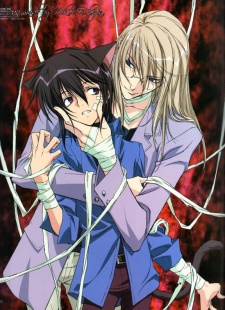
From the point of view of a guarded Western, Japanese sensibility towards paedophilia and incest (predominately sibling incest) is almost akin to entering another world. The subsequent expression of idealistic and erotic ‘beautiful boys in love’ is known as the Shonen-ai (boy-love) genre. Loveless is one such confusing and uncomfortable anime, introducing a potentially paedophilic relationship between protagonists Ritsuka (12 years old) and Sobi (21 years old). This certainly raises the issue of appropriateness (not to mention several hairs on the back of my neck). Nevertheless Loveless is primarily concerned with the loss of innocence in the symbolic sense rather than the physical.

Ritsuka comes from a troubled background. His elder brother Seimei was recently and horrifically murdered, his personality has radically changed, and he suffers memory loss and has an abusive mother steadily becoming unhinged to the point of denouncing Ritsuka as her son. This leads Ritsuka to experience insomnia and social anxieties that require him to meet with a therapist. This is a rather excellent rendition of grief and family turmoil after a significant loss. Having a child come to terms with the reality of death is perhaps the most traditional but also momentous method of losing the innocence of childhood. Loveless is largely concerned with reintegrating Ritsuka, with his growth and self-discovery.

Sexuality and intimacy are subservient but imperative themes. Loveless takes place in an alternative world, inhabited by kemonomini- humans possessing cat-like features (ears and tails) as an open display of their virginity. These features will be lost after their first sexual encounter, acting as a visual separation between adults and children. With regards to the relationship between Ritsuka and Sobi, there is an element of mentorship rather than lover (keeping with the tradition of which this springs from). Sobi’s love for Ritsuka does not come from genuine desire or attraction. Instead it is the express command of his former master Seimei. In this way we can view Sobi as a surrogate brother, an anchor of support rather than a sexual predator (sort of). Though Sobi is portrayed as non-threatening, it’s hard to get around his most inappropriate actions such as outright kissing Ritsuka.

The storyline is one that is intrinsically complicated. On the one hand there are some great fantasy elements with the notion of true names binding people (typically same-sex couples) as fighters and sacrifices (soul-mates in effect) and are trained at a secret school to do battle with one another. While this might give the impression of a rich, multi-layered concept, it should be made clear that none of these elements are nearly fleshed out enough to be satisfactory. This is certainly understandable considering that the manga had only published four volumes at the time the anime was released. Still it does limit the overall enjoyment as Loveless never reaches a gratifying conclusion of any kind. To make matters worse the last episode reveals a shocking revelation regarding the death of Seimei. Needless to say this is a tad frustrating.

Regardless there is something about Loveless, something beautiful, something captivating that will mesmerize its audience and make them want to learn more about this strange little world. Well, so long as they can overlook the creep factor.

Rating: 7/10

For Fans of: Kuroshitsuji, Gravitation, Yami no Matsuei 

Tuesday, 5 June 2012

Ikoku Meiro no Croisee - Review


Taken out of context, Ikoku Meiro no Croisee or Croisee in a Foreign Labyrinth is a perfectly charming historical adaption of life during the second half of the nineteenth century. The anime explores cross-culturalism in a manner which is both reverential but also understated. While Ikoku Meiro no Croisee never explicitly crosses the border into racism, it does however paint a rather rose tinted view of the time period, especially considering that racial prejudices were rife during the era – i.e. Social Darwinism.

However the strength of the anime is in its characters, succeeding in a cast that are dynamic and also endearing to behold. Despite the primary emphasis on Yune, she is a relatively unremarkable character. Her concept is one that is often overused in the depiction of Japanese girls in which ‘cute’ and ‘doll-like’ are the only conceivable traits. Fortunately Yune is a little more refined and well-rounded than most and her character is surprisingly well suited. Nevertheless when compared with the scope of the cast, Yune feels flat and one-dimensional, almost an object rather than a person.

On the other hand, the male protagonist Claude is an adept straight-man with a fleshed out backstory and plenty of personal development within a relatively short amount of time. Significantly Alice provides the right balance of annoyance and fangirlism to make for intriguing melodrama. While Oscar and Camille are excellent secondary characters, each adding a sense of stability and insight into the complex constrain of society.

Still when put into context, the plot of Ikoku Meiro no Croisee really falls apart. A young girl travels to the other side of the world with a complete stranger so that she can work as a maid in his grandson’s poorly performing business. The immediate question is why? Was this a regular occurrence at the time? Amusingly Camille points out that Claude knows very little about Yune, not her family status, not her age, nothing. The crushingly disappointing aspect of this series is that it never addresses who Yune is. We never learn why she wanted to come to France, if she did at all. We never learn how she and Oscar met. We never learn how a young Japanese girl became fluent in French. In fact the only thing we ever learn about Yune’s backstory is that she has an older sister who went blind. Granted this is a pretty touching and elegantly told but it makes even less sense. Why would Yune leave her blind sister (of whom she feels responsible for) alone while she runs off to Paris for an unspecified amount of time?

This is the only real flaw of Ikoku Meiro no Croisee. It demands the temporary suspension of reality in that the audience only focus on the moment. If you do, Ikoku Meiro no Croisee offers a heart-warming, slice-of-life tale with a beautiful cultural twist. Just don’t ask it too elaborate…

Rating: 8/10 

For fans of: Gosick, Rozen Maiden, Hourou Musuko

Wednesday, 30 May 2012

Dantalian no Shoka - Review


I have to admit, this one was a bit of a doozie.

Dantalian no Shoka or alternatively Bibliotheca Mystica de Dantalian (The Mystic Archives of Dantalian) is certainly a peculiar one. At a mere twelve episodes the series is pretty easy-going and fits nice and tidily into the Victorian/Edwardian mystery niche that the Japanese are so fond of. On the other hand, it’s lazy and unsubstantial. It seems to almost pander to said niche rather than seeking expansion or development. And there are plenty of animes that handle this cliché better and manage to have a resolution.

Set in England after the First World War, Hugh “Huey” Antony Disward (voiced by none other than the black butler himself, Daisuke One) inherits his grandfather’s massive estate and underage demon/doll/library-girl, Dalian as well. The plot focuses on the duo as they recover phantom books, objects which offer the reader non-specific magic powers. As an episodic series, Dantalian no Shoka is entertaining enough, through the initial premise – Dalian is a library – is never actually explored or explained. It’s just accepted. Much like Huey and his new role through he really has no obligation to. And yet at no point does Huey display any resistance nor does he ever question Dalian regarding her origins or how her powers work. He just accepts it, which is not how a normal human being would behaviour but there you go. This is a prime example of poor character construction. Sure Huey can get shot in the stomach, bleed out, get up and carry Dalian as he jumps out of window then run away from a pack of hungry zombies but ultimately does that give him a personality? Nope. It just makes him a bland, one dimensional hero archetype. Needless to say Dalian’s character or lack thereof isn’t any better.

Admittedly Dantalian no Shoka reminds me a lot of Gosick – same time period, same moe-girl and older guy couple, same preliminary mystery premise, same sleek animation. It actually surprised me that the two were not made by the same company. Ironically what wore thin with Gosick is what gives Dantalian no Shoka its strength and vice versa. For example whereas Gosick didn’t work as an episodic series and the bigger picture was much more interesting, it’s quite the reverse for Dantalian no Shoka, which seemed content to shoehorn something resembling a main storyline very last minute and I do mean last episode last minute. The effect was pretty disastrous. It felt rushed, half-hearted and completely unintended, like the producers had planned for a longer run but ended up stopping mid-point just as something new and exciting was occurring. Ultimately this pulled the series down.

Rating: 6 /10

For fans of: Black Butler, Gosick, Rozen Maiden 

Monday, 21 May 2012

Mawaru Penguindrum - Review


There are animes, there are art forms and then there is Kunihiko Ikuhara, the director of iconic magical girl animes Sailor Moon and Revolutionary Girl Utena. Evidently Ikuhara is well versed in cookie-cutter shows as well as breath-taking breaking the mould shows. So you’ll either get exactly what you want or exactly what you didn’t expect. Nevertheless both Sailor Moon and Revolutionary Girl Utena deal with a similar platform (not to mention virtually identical animation); Mawaru Penguindrum takes a fresh and entirely different approach. The concept is a little hard to pin down as the genre(s) is less shojo-romance and more mystery/comedy/sci-fi. And there are penguins. Lots of penguins.

The series centres on three siblings, twins Shouma and Kanba and their terminally ill younger sister, Himari. Initially Himari dies but is immediately reanimated into a penguin princess during one of the most spectacular magical girl transformations I’ve ever witnessed. The new and improved Himari demands a penguindrum in exchange for their sister’s new found health. What is a penguindrum? The princess doesn’t say, nor do we really find out until the very last episode and even then it’s still a little ambiguous.

The characters are all first rate. It’s near impossible to dislike any of them. Shouma and Kanba serve as superb protagonists, challenged with the heart-wrenching task of trying to save a loved one, a task that eventually leads them apart and seeking conflicting paths. Himari appears cute as a button one moment, than high-and-mighty princess the next, both roles are electrifying. One potential problem is the incest, fortunately that is resolved in the most satisfying conclusion, it’s not incest (major spoilers). Even Ringo, who is principally introduced as an annoying, single-minded stalker, has such stark revelations about her past, that the character is renovated into someone relatable and ultimately likable.

Mawaru Penguindrum is very much a character study in the sense that all of the primary cast have a rough upbringing and are in some way scarred, allowing for plenty of growth and development. One minor setback of the traumatic childhood is the over use of the lonely/abandoned child complex. This leads to great effect in some situations, namely the horrendous child broiler scenes which really work to drive home that there is something underlying evil with this society and not so much in others, chiefly the Masako storyline. Despite what I said early, this is one character that we didn’t get to see utilized to her full potential. She and her brother Mario were mostly padding for a shocking plot twist. Interesting enough, but perhaps not quite on par with the rest of the cast.

The storyline is impeccably well-crafted. From the outset, this is set up to be a tragedy. The beginning is (naturally) deceptive as the light-hearted, whimsical romantic-comedy element is gradually lost and replaced with a much colder ascetic. Mawaru Penguindrum is also a masterpiece of symbolism and surrealism that will certainly require several views in order to soak up all the references. Clearly nothing has been left to chance, or fate as is more relevant.

Mawaru Penguindrum is nothing short of magnificent. The sheer level of depth, of detail that has gone into the shows meticulous design is quite frankly staggering and the outcome is simply flawless. The devotion of the siblings as the core motivator is pretty powerful and the ending is incredibly satisfactory if a little open ended. Kunihiko Ikuhara is a true visionary and hopefully this will be the shape of more things to come from this wonderfully talented director.

Rating: 9/10
Recommended. 

Sunday, 13 May 2012

Tiger and Bunny Review


The core concept behind Tiger and Bunny isn’t exactly new and/or original. The superhero as a celebrity aspect has been paraded around before, most notably in the Iron Man films. Tiger and Bunny simply takes this to the next conceivable consumer level, the superhero as a reality TV star. As a self-confessed marvel geek, this very notion is contradictory to what constitutes as a hero, which is a well-held running theme. What is so controversial about this premise is the notion that the superheroes fight crime in order to win brownie points as oppose to their personal sense of moral justice. In fact the only character that really maintains old skool hero values is our primary protagonist, Tiger which initially results in his low ranking and often become more of a hindrance.

The secondary protagonist, Bunny has a tragic backstory more in keeping with the classic superhero roots, pretty blatantly a Batman rip. Fortunately the writers have the good sense to spin a new angle and make the character mainly concerned with solving his parents’ murder as oppose to becoming a vigilante. However we don’t learn much about the other heroes and when we do it often exposes their all too human motivations, pressure from parents, wanting to stand out or in the case of Blue Rose, wanting to become a teen idol. In the long run it renders the characters human and flawed, which is not what heroes are supposed to represent. Yet by grounding them in a sense of reality, it actually gives them a greater depth rather than having them portrayed as saints taking on societies responsibilities just because they were born with super powers.

Having said that there are a few minor hiccups, the most notable is in regards to Tiger and his conflict as both superhero and single father. While it’s a nice twist to have a single father superhero, in this particular anime which re-writes the superhero genre, it’s never really explained why this division is necessary. Since his identity is kept secret and the rest of his immediate family already know, why hide it from his pre-teen daughter? Doesn’t he want her know? Wouldn’t that make his life easier? Wouldn’t she be more sympathetic with his absentee parenting? Or he could just quit and raise his child full time, which should actually take priority. In all it seems too contrived and too forced, not to mention almost out of context with the show.

What really intrigued me about this show was the collaboration between cultures. The notion of the superhero, the overt commercialization and especially the setting right down to the dollar currency system are grounded in western ideologies. Even the genesis of the superheroes has a lot in common with another popular American franchise, the X-Men. Yet later on when Tiger leaves to visit his daughter we’re transported to a rural Japanese backdrop. This element of harmony is made none the more clearer than between the two protagonists, Tiger is obviously Japanese and Bunny is western, presumably American. Interestingly there is a similar congruence with the futuristic technological advances whilst being set in 1978 (according to the Christmas clock). Overall this blend mingled well with the plot, adding an extra creative boost along the way.

As everyone should know, every good superhero requires a nemesis. While Tiger and Bunny did deliver a big bad towards the end of the series both with an unexpected twist and the potential for a much greater threat, this paled in comparison to the anti-hero, Lunatic. The character was introduced in small intervals allowing the audience to connect the dots while the protagonists remain blissfully unaware. It was almost a shame that Lunatic wasn’t utilized more.  Still, there is plenty of room for a follow up series and even talk of a movie.

Rating: 8.5/10


Thursday, 26 April 2012

Steins;Gate Review


In terms of plot, Steins; Gate is a remarkable accomplishment. It handles an interesting premise with an original and thought-provoking manner. As a time-travel-theory novice I can’t vouch for the accuracy of the physics involved, nevertheless the context is pretty heavy-going, enough to indicate the writers have a vague idea over the subject matter. Or at least enough to make the utterly absurd sound plausible i.e. the microwave that sends text messages to the past. Unfortunately this is one of the few drawbacks, the overtly technical side. Understandably it can be a bit overwhelming especially in the beginning and factoring in the speed at which things progress, it’s not easy to digest initially. 

Steins; Gate takes it time to introduce the cast, the setting and the science, all done to the anime’s credit, before plummeting full throttle into a magnificent thriller that becomes the focal point. Despite a relatively repetitive sequence of events (literally), the storyline itself does not become repetitive. Quite the opposite actually, it becomes grippingly addictive. This is in no small part due to the unravelling of the complex, multi-layered plot and the fascinating exploration of trying to twist it back together.

For the most part, the characters are crafted wonderfully. Okarin as the primary protagonist and self-proclaimed mad scientist experiences the most character development largely down to the emotional roller-coaster he endures and thus is the most three dimensional. Whereas his immediate companions, Mayuri and Daru are essentially stereotypes or stereotypes, yet are delightful enough. Kurisu the female protagonist and blatant love interest is a little more challenging. On the one hand her interactions with Okarin provide enjoyable conflict and on the other her personality weakens in the context of the backstory. However it’s the secondary cast, cat-girl and the girl-guy who are an eternal source of annoyance. At first I took them for throw away characters and I wasn’t strictly speaking wrong. As plot devices they’re integral, as characters they’re not.

All in all, Steins; Gate is an incredible feat, one that’s rarely seen these days. Yes, it’s not perfect, there are flaws primarily in the character department, but these are so minimal in comparison to the shows ultimate triumph, it practically re-writes the sci-fi genre. High recommendations.

Rating: 9/10

Monday, 23 April 2012

Hana Saku Iroha - Review


Hana Saku Iroha was somewhat of a bumpy ride, producing varying reactions along the way. In the end it had a wonderfully well written arc that result in a solid and satisfying climax that shined over prior calamities. I think the main problem was that it was good at what it promised, a slice of life, coming of age, the daily on-goings of a traditional Japanese Inn and appallingly bad at the unexpected – the outlandish comedy and romance triangle.  In both these areas characters and situations didn’t feel natural and interrupted the general flow – for example the perverted writer who writes explicit porn involving the underage girls at the inn, when discovered he kidnaps Ohana and later attempts suicide. Giving him a job at the inn is obvious the workings of a rational, sane mind. Yet this character becomes the perverted comic relief for the remaining series. Despite the fact I can’t imagine any teenage girl finding this situation comfortable. 

As for the romance section, the Minko-Trohu-Ohana triangle is expectedly, but even so the latter part appears almost out of nowhere. It certainly doesn’t come across as a genuine love interest, more or less like a plot device to create tension between Minko and Ohana. It does serve one good purpose, with Minko unjustly on the war path with Ohana; the ever-annoying Ohana is given a sympathetic light and thus becomes more endearing. As for Ohana, the primary protagonist the series did a fantastic job overall of making an overtly optimistic teenager, likable and compelling. In context this is a girl who quite literally has her life turned upside down and placed into a familiar environment, but what makes her relatable is the moment she begins to challenge her mother in favour of the inn. This is when Ohana stops being the archetypal heroine and becomes an average teenager.


 Rating: 7/10 

Friday, 20 April 2012

Ao No Exorcist Review

Developed from Dragonball, the shounen formula is a fairly consistent style of anime, considering the most well-known and popular shows tend to adhere to pattern – Naruto and Bleach for example. This is not without its drawback. Shounen animes (fighting ones in particular) are often long and overtly drawn out, having fighting sequences that can span for multi-episodes, which is especially tedious if they are unimportant to the major storyline, for instance a secondary or even a third-rate character fighting an inconsequential side villain. Not to mention the tedious and endless filler arcs.

Ao no Exorcist is not a radical leap from the shounen formula, not by any stretch of the imagination, in particular if you address the similarities between it and Bleach (which I will later on). Nevertheless there are several remarkable improvements to the tried and test formula. The most prominent is reduction of long-winded fighting scenes. Aside from the big bad square off during the final three episodes, most action is tamed to one or two episode parters and fights do not exceed themselves needlessly. Ultimately this means the audiences is not overloaded with violence, deterring away from the plot, which results in genuine tension since we are invested in the characters. As much as I like Bleach and Dragonball, Ichigo and Goku are fairly bland archetypal protagonists. Right from the get go we know if beaten both will eventually return stronger, even if killed (in the case of Goku).

A shorter, more concise series is beneficial to the filler episodes as well. Since in Ao no Exorcist these are singular, stand-alone episodes and therefore don’t come across forced. It’s actually pretty favourable to observe characters during their ‘off-days’, despite the limited use of the school backdrop. It really was a shame that the anime didn’t make full use of the school outside of the Exorcist classes. Of course this is comparable to Bleach and Dragonball, where the protagonists often leap from one epic adventure straight into another, living filler episodes (as mentioned prior) empty and forced comic-relief. Take the impending epic battle between Cell and instead of training Goku’s wife decides she wants him and his green alien training buddy Piccolo to learn how to drive. Really? I mean is that even a priority? It just seems so silly and out of place.

Onto the tropes! Unfortunately in the character department Ao no Exorcist does not excel, since it opts out for the safe approach. We have our main character, Rin, the son of Satan and like most protagonists, his birth right feels like the weight of the world on his shoulders. Nicely this is even pointed out plenty of times since Rin is often running head first into danger on his own. This is in part due to his heritage the need for secrecy but is a habit Rin finds hard to break. In comparison Ichigo (Bleach) has actually very little reason to the main protagonist. He only gets involved with the conflict after his two potential love interests are kidnapped, yet that seems enough to declare Aizen his enemy and take on the responsibility of stopping him. Whereas Rin’s reasoning is much more simplistic and holds more realism. Satan killed his father, Rin want’s revenge. It’s no wonder vengeance is such a high motivator; it effectively brings the conflict to a more personal level.

The secondary characters are where things don’t quite gel. We have the rival archetype Ryuji, doubling as potential love interest and healer archetypes Shiemi, the smart but haughty girl archetype Izumo, the shamelessly big chested-little clothing teacher archetype Shura (more common than you think, the good guy on the wrong side archetype Arthur August Angel and the mysterious, has additional motives archetypes Mephisto. While most of them are pretty harmless and even do a good job upholding their stereotype, others are woefully grating and just extend into plot devise territory – take Arthur August Angel as an prime example.

What gives Ao no Exorcist a real boost is the additional of Rin’s twin brother, Yukio. This enables the plot to reduce the pressure placed on Rin as primary protagonist and even at the end have a more balanced resolution. By getting rid of this lone-wolf complex, the anime enables a brotherly bond to be beautifully created and developed over time. There are one or two hiccups along the way, the sudden jerk as Yukio rapidly changes character feels a little stiff but this is quickly turned around.

On the disappointing side, the main villain was a colossal let down. The series spend a good deal of time introducing Satan as a bad arse and portraying him as a major player, then suddenly right at the end we received some crucial information that is supposed to flesh out the character from standard bad guy archetype – he’s got a I’m so lonely, I just want to be loved side. It doesn’t work, primarily because it flat out contradicts not just the original premise of the character but also their immediate actions. Making your character do a complete 180 is not adding depth.

Despite the ups and downs, Ao no Exorcist is a very strong show and has potential to be next big shounen anime. Alas there seems no secondary season in sight, through a movie is in the works. Perhaps this is for the best, let the manga develop first than have a second season. No filler seasons!

Rating: 8/10

Monday, 16 April 2012

A Channel & DOTSO Review

A Channel - Review

A show about the daily lives of four school girls might not seem very interesting on paper but in practice it’s moderately successful. This is because the anime focuses efficiently on the protagonists and on developing them as distinctive but not radically difference individuals. Of course this is not without flaws. Run, the resident cute airhead is borderline retarded. This is demonstrated numerous times but the clearest example is the instance in which Run nearly falls out of a three-story window whilst waving at her friend. That’s just natural selection surely? Or the time when she forgets to put on her underwear and flashes her friend, I mean how does this girl function in the real world? Evidently the creators are incapable of decipher between naïve and dumb. Another problem takes the form of not knowing who the target audience is. On the one hand the non-threatening female characters and their mini-escapades into the joys of friendship and growing up would suggest primarily young girls are the intended mark. Yet the often uncomfortable and somewhat sexualisation of their cuteness (take the underwear episode or the teacher with a crush on Run’s forehead) would suggest an older male demographic. Fortunately these are few and far between. In short if you want an enjoyable, simplistic, non-challenging anime to pass the time, A Channel delivers.

Rating: 5/10


Denpa Onna to Seishun Otoko – Review

With a name like Electromagnetic Wave Woman and Adolescent Man, you know this is going to be awesome right? With a premise of a young girl who is a self-proclaimed, futon-wearing alien, having been missing for half a year and later recovered floating in the sea; this isn’t going to be a chore to seat through. Well you’d be wrong on both accounts. DOTSO is just another cute-but-somehow-inept-female meets boy-void-of-personality. Rather than utilize the premise to its full potential, the anime prefers to exploit Erin’s backstory merely as a device to make her childlike and helpless, thus dependent on her male cousin. But perhaps the most insulting part is that we never learn what did happen to Erin, not even ambiguously. It’s never addressed, which renders the entire premise utterly pointless. The writers could have substituted a less outlandish backdrop – Erin was bullied at school and thus became a shut in, you could still have exactly the storylines. If fact that would make people’s reactions to her more convincing. Presumably the knowledge of her disappearance/reappearance was well known, any person with common sense would determine that the girl is suffering amnesia due to some form of trauma and take that into account before treating her like a social leper. Oh no, Erin generally fears returning to school and has trouble finding employment because people find her ‘weird’. Why? Erin wraps a futon around herself. Why? Because she is mental/emotionally traumatised! Why? Because she was missing for half a year! Or the brain-dead mother who doesn’t see fit to put her daughter in therapy, apparently she thinks Erin is going through a fad. Or maybe she is waiting for some generic male relation to come in save the day with optimism! And how does this marvellous series end? With an entire episode dedicated to a baseball game, which our hero is absent from as he has been sent on a random quest to locate the father of one of his miscellaneous friends. A filler episode! It ends on a filler episode. No, the entire series is a filler episode.

Rating: 4/10

Tuesday, 10 April 2012

Deadman Wonderland - Review

My first anime review of 2012 and it’s something that’s been on the backburner for quite a while. Deadman Wonderland is on the meh side of okay, despite being one of the few anime’s I’ve actually managed to finish since returning to the bustling university lifestyle. I chalk that up to the crisp animation more than the storyline, which I’ve had the most problems with.

Primarily Deadman Wonderland makes no sense. The story is inconsistent, its chief aim is to take the protagonist Ganta, a fourteen year old high school student out of the comfortable life his lead so far and screw around with him as much as possible. For instance, we are initially plummeted into a horrendous mass murder in which Ganta is the number one suspect. How do the authorities reach such a conclusion? He was the only living survivor. Yup, that’s it. I mean they don’t even wait for him to regain consciousness and give his sole survivor eye-witness account before putting him in handcuffs and charging him. Sloppy police work or part of a larger conspiracy? We don’t know because it’s never addressed. Nor is the fact that the warden of the super prison is moonlighting as Ganta’s lawyer; now surely that’s a conflict of interest? Or maybe the warden is in on the conspiracy? Nope, never addressed. Once Ganta is in the prison and this plot point has done its job, off it goes, never to be seen or heard from again.

Instead we’re introduced to Deadman Wonderland a prison/theme park/battle royale game. Complete with poisoners collars that kill off the prison population unless they eat the antidote (candy) every three days. Admittedly this is an interesting twist, because it gives the prisoners a reason to partake in dangerous sports, it’s quite literally a matter of life or death. But does the prison have a never ending supply of generically ‘bad’ criminals who are expendable? Surely this raises eyebrows? Nope, since the spectators think its fake, no one seems to question the body count. Convenient since it won’t be addressed again.

Half way through, the story takes its final leap into disbelief when Ganta discovers a secret prison underneath his own. One where people (like him) with special blood killing powers are pitted against each other semi-mortal kombat style, all the while shadowy agents watch. This just raises even more questions than it answers. Why do they have these powers? Why were they caught if they could clearly use they own blood as a weapon? Perhaps more importantly, can’t we think of better things to do with them rather than cage fight? Nope, not gonna answer these either.

Undeniably the latter half is the most exciting and feels the most organic, in that this is where the plot wanted Ganta originally. But it could have moved along much better and cleaner, instead of being wishy-washy. Unfortunately the series is only 12 episodes long and I have a feeling that many of the unanswered questions would have been brought up later in the show. Too bad there isn’t a season two in sight.

Rating: 6/10

Tuesday, 6 September 2011

Gosick - Review


Gosick finally draws to a close and still I don’t know what to make of it. The entire series inhibited a perpetual state of good moments succeeded by weak moments. The overall inability to remain constant – either good or bad, really let the show down as a whole. Gosick would have certainly benefited from a little more editing and a lot more sense-making! Chuck out the uninspired mush and condense the finer episodes and Gosick would have received a higher rating. Through that still would not have explained the show’s title – what exactly is ‘Gosick’?

In general Gosick lacked direction, seemingly unable to know what genre it was from the very get go. Initially we are introduced to an ‘unravelled the mystery’ plot, composed of a little light school drama and potential romance, before leaping full throttle into adventure, love triangles and the occult. The opening gambit was particularly substandard, the mystery element, lead by the main protagonist, the genius moe-detective Victorique was nothing short of disappointing due to the tiny detail that Victorique is not a genius, every other character is just remarkably dumb. The primary mysteries are ludicrously easy to solve that the only aspect to leaving the viewer in wonder, is whether or not the rest of the cast will cotton on. As the series progresses, the mysteries interweave and the bigger picture has a lot more too often, albeit a lot more convoluted activity.

Nevertheless the series did offer something worthwhile in the form of the oh-so-adorable Victorique. Wonderfully well written and superbly executed, Victorique more than carried the series, especially considering her supporting cast. Gosick fell into the trap of accompanying its leading lady with a hero completely void of a personality that his only faculty seemed to be screeching Victorique’s name at any given opportunity. Other than his ‘Japanese sense of honour’ Kujo has no real purpose to befriend Victorique nor is there any chemistry between them as heavily implied love interests. It’s a shame that within 24 episodes the writing staff was not able to develop this character is to someone vaguely three dimensional. There were nevertheless much more badly written and annoying characters throughout this series, all eggs were undoubtedly placed in the basket marked Victorique.


Rating: 6.5/10

Friday, 8 July 2011

X-MEN - Review


Here it is, the third Marvel/Madhouse studio instalment and the one crossover in particular I was eager to watch being a self confessed X Geek. I couldn’t begin to express my enthusiasm with this little project and yet here in lies the problem. Given that I’m already familiar with the comics, I can’t say I was entirely satisfied with the anime adaptation. Despite the strongest offering to date, I can’t help but feel nagged by the little inaccuracies that held the anime back from complete brilliance.

To start with, I found the choice of cast or rather lack there of to be a consistent problem. Considering the vastness of the marvel universe, the primary x-men roster was fairly limited which seemed a real shame overall. While the anime made the correct decision of making Cyclops its lead character, something pretty novel in recent media history, the supporting cast received a mixed reception. Wolverine actually restored my faith in the character, Emma Frost gave a good suspicious sexbomb and first time animated Hisako was your standard tween, slightly annoying but unexpectedly proved her worth in the end. However the likes of Beast and Storm were audaciously overlooked, all but whitewashed into the background.

The villains on the other hand were a colossal let down. The U-Men were incredibly tedious and one dimensional. Fortunately a mutant baddie did make an appearance and Mastermind did a reasonable job if somewhat clichéd, still he was just not the one I wanted. The sheer lack of Magneto really undermined the whole piece, especially with several references and artwork in the credits, nothing more then empty promises. Nevertheless I have my fingers crossed after watching the epilogue, same goes for Rogue, Nightcrawler and Archangel cameos, if there is a second season of course.

I was further frustrated by Japanese versions of pre-existing characters in the form of Yui Sasaki and Takeo Sasaki who were blatantly based on Moria MacTaggert and Legion respectively. Their personas and appearances are all but identical, why not just use the names as well and thereby acknowledge the original characters? Then again this is little more then a personal regret since both Moira and Legion are old favourites of mine.

Another more prominent problem concerns the script. Despite an interesting premise and a rather gripping opening couple of episodes featuring a concept that’s familiar to long term x-fans and self explanatory to x-newbies, nevertheless the main plot took a massive detour about half way through the season when the X-Men hot tail it out of Japan in spite of not having solved the overarching mystery. The lapse in the middle serves to make the plot feel clunky and the literally leaping back and forth reduces the tension in general. Yet once the x-team return to Japan the storyline begins to excel again, making the diversion to New York feel out of place. Honestly the show would have benefited more from an episodic approach.

Nonetheless anime X-Men has some strong advantages in its favour. For one thing, it’s visually stunning, the animation remains true to the comic books while having placed a sleek twist on character designs, giving very striking individual appearances. I have to take my hat off to Madhouse studio, particularly when you compare to the last American X-Men cartoon, which frankly had such a worse animation and flat character designs, I’ve ever seen in an x-related cartoon.

In all, the anime had a lot of squandered potential but that doesn’t necessarily make the series bad. Perhaps the main problem was that the series was an adaptation and therefore open to interpretations. Hopefully there will be a second season and hopefully it can improve on some of these flaws.

Rating: 7.5/10

Wednesday, 6 July 2011

Ano Hi Mita Hana no Namae o Boku-Tachi wa Mada Shiranai Review


Animes like We Still Don’t Know the Name of the Flower We Saw That Day, neatly nicknamed Anohana for short, are rare to come by. Wrapping up this month after a mere eleven perennial episodes, Anohana is fairly short but definitely sweet, remaining on the mark for the entirely of its run. It was smooth sailing for the most part with a couple of hiccups along the way, in particular the melodramatic minor characters, however strong planning and execution gave the show a greater purpose, more compelling then the sum of its parts.


The storyline focused on the complex relationship between five childhood friends who have drifted apart three years prior after the death of their sixth member, Meiko ‘Menma’ Honma. The primary protagonist, Jinta ‘Jintan’ Yadomi, the group’s former leader, now social recluse, is the only person able to see or communicate with Menma of whom he initially dismisses as a hallucination, a manifestation of his guilt. The relationship between Jintan and ghost girl Menma is both moe-humorous and deeply troubled at the same time, as Jintan struggles to come to terms with the supernatural return of his former friend. In essence Anohana is a coming-of-age drama, which has its characters enthralled with typical teenage dilemmas such as unrequited crushes, depleting friendship circles and social alienation, all the while having to deal with significant childhood trauma.


Anohana not only crafts great chemistry between Jintan and Menma, but also amongst the other four side characters, Anaru, Tsuruko, Yukiatsu and Poppo. The characterization is nothing short of wonderful, each teenager depiction is detailed and trendsetting, while primarily consisting of angst-ridden teenagers, and none come across as annoying, whiny or vastly unlikable. I’m almost impressed. This has to be a first. A primary strength of Anohana is that each character faces their own brand of grief which transpires into very different reactions. It explores the many ways that grief can be felt or expressed through physical escapism, falling in with the wrong crowd to irrational feelings of jealousy and resentment.


Nevertheless this tactic is not without its flaws. Whereas some characters are subtle and realistic in their anguish, others are overplayed. None more so then cross-dressing Yukiatsu, who’s youthful love for Menma drives him to impersonate her, white dress and all. You’ve seriously got to question how sincerely a child can not only comprehend an intricate emotion such as love but also hold a flame indisputably for three years. On the other hand Tsuruko was severely downplayed, while she remained the most ‘together’ member of the group, I couldn’t help but find her primary reason – the unreciprocated crush aspect, rather disappointing since it was already relevant to Anaru.


As a whole Anohana is a fine example of how well simplicity and innovation can bounce off each other under firm direction. The anime might have ended with one of the more emotionally charged climaxes this season, but it didn’t come as wholly unexpected, given the flow of the series. Reconciliation of the group was the ultimate goal, despite the obvious the series reframed from becoming sloppy or derived, and managed to pull of a touching and exceptional finale. Excellent series and highly recommended.


Rating: 8.5/10

Saturday, 16 April 2011

Level E - Review


Level E outlines a straight-forward sci-fi premise, one we’re certainly all familiar with, not only do aliens exist but Earth is infested with them. As the announcer clarifies at the beginning of each episode, some species come in peace, others not so much, but all in all the Earthlings remain blissfully unaware even as the word DEATH materializes across the planet. Yet despite the ominous opening, Level E is anything but dark-hearted. First and foremost, Level E is a comedy and a bloody brilliant one at that. It gleefully indulges in the weird and wacky while simultaneously delivering a masterpiece of intrigue and originality.

The series is divided into a collection of two-part, three-part episodes, roughly connected by its main character, the trickster Prince as he moves onto his next unsuspecting target. The initial arc is the longest but overall definitely the best. Not only does it introduce the backdrop for the series, the small secluded alien ridden town, it also initiates the first major plot twist – that of Prince Baka’s true identity and his sadistic-prankster personality. The characterization on Level E is generally superb all round, but obviously the Prince stands out and not simply due to the ample amount of screen time. The chemistry between the Prince and the rest of the cast is outstanding, considering that a lot of the humour is derived from interactions and dialogue, particularly in the first episode which is no small feat.

Perhaps the greatest strength of Level E is that is does not just rely on humour to move from point A to point B, there is also a well constructed background of drama on par with any mystery/suspense anime. Level E strives to keep the audience on their toes as such there is always another hidden element to each storyline, another twist, another turn and very often flipping the entire plot on its head with plenty of unexpected endings. I wouldn’t advise trying to figure them out ahead of time. Odds are you’d be wrong. Interestingly the manga was written in 1995-7 and yet manages to parody clichés that continue to plague modern manga and anime – love at first sight, walking in on the opposite sex while showering, etc, whilst openly refusing to resorting to fanservice to get a giggle. Overall the direction is incredibly fresh taking into account its age.

Nevertheless once the preliminary storyline concludes and the series begins to branch off, it never quite returns to same calibre. The next major plot involves five preteens being forced into colour coordinated parody rangers, entertaining but not as good. The same is true for every following episode until the original cast reunite for the finale which quite neatly closes the show with the Prince finally being outsmarted. Unfortunately this is where the manga also ends, so if a second season were on the cards it would be pure adaptation. To be honest, I like this show as is. It doesn’t need a sequel.

I could honestly kick myself for my hesitation towards picking up Level E, alongside Hourou Musuko and Madoka Magica, Level E is one of the better shows this winter season. Highly recommended.

Rating: 9/10