Showing posts with label Genre: Drama. Show all posts

Wednesday, 11 July 2012

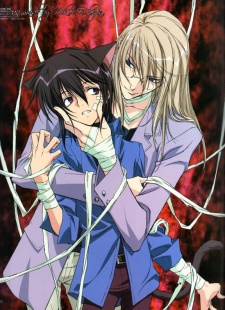
Loveless - Review


From the point of view of a guarded Western, Japanese sensibility towards paedophilia and incest (predominately sibling incest) is almost akin to entering another world. The subsequent expression of idealistic and erotic ‘beautiful boys in love’ is known as the Shonen-ai (boy-love) genre. Loveless is one such confusing and uncomfortable anime, introducing a potentially paedophilic relationship between protagonists Ritsuka (12 years old) and Sobi (21 years old). This certainly raises the issue of appropriateness (not to mention several hairs on the back of my neck). Nevertheless Loveless is primarily concerned with the loss of innocence in the symbolic sense rather than the physical.

Ritsuka comes from a troubled background. His elder brother Seimei was recently and horrifically murdered, his personality has radically changed, and he suffers memory loss and has an abusive mother steadily becoming unhinged to the point of denouncing Ritsuka as her son. This leads Ritsuka to experience insomnia and social anxieties that require him to meet with a therapist. This is a rather excellent rendition of grief and family turmoil after a significant loss. Having a child come to terms with the reality of death is perhaps the most traditional but also momentous method of losing the innocence of childhood. Loveless is largely concerned with reintegrating Ritsuka, with his growth and self-discovery.

Sexuality and intimacy are subservient but imperative themes. Loveless takes place in an alternative world, inhabited by kemonomini- humans possessing cat-like features (ears and tails) as an open display of their virginity. These features will be lost after their first sexual encounter, acting as a visual separation between adults and children. With regards to the relationship between Ritsuka and Sobi, there is an element of mentorship rather than lover (keeping with the tradition of which this springs from). Sobi’s love for Ritsuka does not come from genuine desire or attraction. Instead it is the express command of his former master Seimei. In this way we can view Sobi as a surrogate brother, an anchor of support rather than a sexual predator (sort of). Though Sobi is portrayed as non-threatening, it’s hard to get around his most inappropriate actions such as outright kissing Ritsuka.

The storyline is one that is intrinsically complicated. On the one hand there are some great fantasy elements with the notion of true names binding people (typically same-sex couples) as fighters and sacrifices (soul-mates in effect) and are trained at a secret school to do battle with one another. While this might give the impression of a rich, multi-layered concept, it should be made clear that none of these elements are nearly fleshed out enough to be satisfactory. This is certainly understandable considering that the manga had only published four volumes at the time the anime was released. Still it does limit the overall enjoyment as Loveless never reaches a gratifying conclusion of any kind. To make matters worse the last episode reveals a shocking revelation regarding the death of Seimei. Needless to say this is a tad frustrating.

Regardless there is something about Loveless, something beautiful, something captivating that will mesmerize its audience and make them want to learn more about this strange little world. Well, so long as they can overlook the creep factor.

Rating: 7/10

For Fans of: Kuroshitsuji, Gravitation, Yami no Matsuei 

Monday, 23 April 2012

Hana Saku Iroha - Review


Hana Saku Iroha was somewhat of a bumpy ride, producing varying reactions along the way. In the end it had a wonderfully well written arc that result in a solid and satisfying climax that shined over prior calamities. I think the main problem was that it was good at what it promised, a slice of life, coming of age, the daily on-goings of a traditional Japanese Inn and appallingly bad at the unexpected – the outlandish comedy and romance triangle.  In both these areas characters and situations didn’t feel natural and interrupted the general flow – for example the perverted writer who writes explicit porn involving the underage girls at the inn, when discovered he kidnaps Ohana and later attempts suicide. Giving him a job at the inn is obvious the workings of a rational, sane mind. Yet this character becomes the perverted comic relief for the remaining series. Despite the fact I can’t imagine any teenage girl finding this situation comfortable. 

As for the romance section, the Minko-Trohu-Ohana triangle is expectedly, but even so the latter part appears almost out of nowhere. It certainly doesn’t come across as a genuine love interest, more or less like a plot device to create tension between Minko and Ohana. It does serve one good purpose, with Minko unjustly on the war path with Ohana; the ever-annoying Ohana is given a sympathetic light and thus becomes more endearing. As for Ohana, the primary protagonist the series did a fantastic job overall of making an overtly optimistic teenager, likable and compelling. In context this is a girl who quite literally has her life turned upside down and placed into a familiar environment, but what makes her relatable is the moment she begins to challenge her mother in favour of the inn. This is when Ohana stops being the archetypal heroine and becomes an average teenager.


 Rating: 7/10 

Wednesday, 6 July 2011

Ano Hi Mita Hana no Namae o Boku-Tachi wa Mada Shiranai Review


Animes like We Still Don’t Know the Name of the Flower We Saw That Day, neatly nicknamed Anohana for short, are rare to come by. Wrapping up this month after a mere eleven perennial episodes, Anohana is fairly short but definitely sweet, remaining on the mark for the entirely of its run. It was smooth sailing for the most part with a couple of hiccups along the way, in particular the melodramatic minor characters, however strong planning and execution gave the show a greater purpose, more compelling then the sum of its parts.


The storyline focused on the complex relationship between five childhood friends who have drifted apart three years prior after the death of their sixth member, Meiko ‘Menma’ Honma. The primary protagonist, Jinta ‘Jintan’ Yadomi, the group’s former leader, now social recluse, is the only person able to see or communicate with Menma of whom he initially dismisses as a hallucination, a manifestation of his guilt. The relationship between Jintan and ghost girl Menma is both moe-humorous and deeply troubled at the same time, as Jintan struggles to come to terms with the supernatural return of his former friend. In essence Anohana is a coming-of-age drama, which has its characters enthralled with typical teenage dilemmas such as unrequited crushes, depleting friendship circles and social alienation, all the while having to deal with significant childhood trauma.


Anohana not only crafts great chemistry between Jintan and Menma, but also amongst the other four side characters, Anaru, Tsuruko, Yukiatsu and Poppo. The characterization is nothing short of wonderful, each teenager depiction is detailed and trendsetting, while primarily consisting of angst-ridden teenagers, and none come across as annoying, whiny or vastly unlikable. I’m almost impressed. This has to be a first. A primary strength of Anohana is that each character faces their own brand of grief which transpires into very different reactions. It explores the many ways that grief can be felt or expressed through physical escapism, falling in with the wrong crowd to irrational feelings of jealousy and resentment.


Nevertheless this tactic is not without its flaws. Whereas some characters are subtle and realistic in their anguish, others are overplayed. None more so then cross-dressing Yukiatsu, who’s youthful love for Menma drives him to impersonate her, white dress and all. You’ve seriously got to question how sincerely a child can not only comprehend an intricate emotion such as love but also hold a flame indisputably for three years. On the other hand Tsuruko was severely downplayed, while she remained the most ‘together’ member of the group, I couldn’t help but find her primary reason – the unreciprocated crush aspect, rather disappointing since it was already relevant to Anaru.


As a whole Anohana is a fine example of how well simplicity and innovation can bounce off each other under firm direction. The anime might have ended with one of the more emotionally charged climaxes this season, but it didn’t come as wholly unexpected, given the flow of the series. Reconciliation of the group was the ultimate goal, despite the obvious the series reframed from becoming sloppy or derived, and managed to pull of a touching and exceptional finale. Excellent series and highly recommended.


Rating: 8.5/10

Monday, 16 May 2011

Hana Saku Iroha - 06 & 07


To be honest, I haven’t got a lot to say about either episode. They’re certainly not as bad as others have been and yet Hana Saku Iroha seems to have hit a lacklustre patch. It is becoming more prominent that the Inn not doing well and the love triangle between already rivals Ohana and Minko will be major themes later on, something of which I’m looking forward to. Unfortunately this does little to improve the shows current predicament and the simple truth that 7 episodes in and it’s starting to go stale. I’m not sure how the story is going to be able to stretch to 26 episodes…

Verdict: Average


Monday, 2 May 2011

Hana Saku Iroha 05 - Tearful Chef Romance

Initially I thought Minko must have come from a background different to Ohana, one that had led her to be resentful of her new roommate. That was the only reason I could surmise for Minko’s abrasive attitude. As it happens this is not the case, the worse crime her parents committed was to put their foot down against their daughters request to drop out of high school, yet they seem more then willing to let Minko pursue her chef dream by working and living at the inn. You would have thought Minko might have sympathised with Ohana, after all her mother basically pawned her off. In all Minko still hasn’t managed to redeem herself, I can’t stand her personality.

The major dilemma was a fairly obvious mistake and it was a little surprising to see how quickly everyone lapped it up despite only circumstantial evidence. In essence the plot suffered the same problem as episode three only no where near as drastic. It was unable to resolve the current situation without blowing it out of proportion, escalating in Ohana acting like an ass. Well on her own head be it, all anyone had to do was simply ask Tohru, nothing taxing.

Verdict: Fine

Tuesday, 26 April 2011

Hana Saku Iroha -04 Grey Heron Rapsody


A very welcomed return to form after the sheer silliness of last week’s episode. Though this episode did end on a discovery, through not as dramatic, I certainly hope it can be resolved without resorting to the innfolk having to mad chase someone down.

The story moves into a new environment, one we all knew was coming as Ohana begins to attend the local school alongside Minko and Nako. Here Ohana is able to glimpse Minko outside her job and basically she is the same stick-up-her-butt bitch as she is at home. This however seems to make her the coolest girl in the class. Apparently bitchiness is considered cool in Japan, go figure. I feel as through I’m done giving Minko the benefit of the doubt, she is an obnoxious character, one who might find Ohana annoying, but has little valid reason to continuous treat her coldly. After all she did get bitchslapped by her own Grandmother after trying to defend Minko. The last week she was kidnapped and held hostage by a peedo. I mean, Minko give the girl a break already!

On track, Ohana is immediately bombarded with Minko’s fanboys only to be saved by Yuina, the daughter of the rival inn’s owners. Yuina seems the friendly, happy-go-lucky type, a completely opposite to Minko’s character, who now appear to be love rivals, so it will be interesting to see whether Ohana gets caught in the crossfire. The romance element between Minko and Tohru came as bit of a surprise, through it probably shouldn’t have. Minko has a one sided, school girl crush on her primary male handler. Ohana puts two and two together and while attempting to speak to Minko gets strangled for all her efforts. Yeah, Minko, this is probably why you don’t have any friends…

Verdict: Good

Monday, 18 April 2011

Hana Saku Iroha 03 – Balut


After the previous episode ended on a very sudden and dramatic high, I was all set to applaud Hana Saku Iroha for its brilliant delivery and creativity. Regrettably I can no longer do so. It’s almost as if the writing staff wanted to end on something quite shocking but didn’t have the balls to carry suit in the next episode. If the premise had been taken even half seriously, episode three would have been a tough act to follow. Instead they went for some light-hearted romp.

Ohana finds herself taken hostage and tied bondage style by the potential rapist/paedophile novelist of whom porn she stumbled upon at the end of the last episode. However as it transpires he is neither, just a failed writer trying to put together a porn novel in order to pay his bill. Ohana gets a case of Stockholm syndrome and decides to read his sex story about her and the other hostesses. Seriously did this child get dropped on the head repeatedly? Last week I discussed how genuine I felt her character was, this week Ohana relapsed.

Does it end there? Does it feck! As if this situation wasn’t bad enough, the creepy novelist attempts to make a quick get away after being discovered, only to have the inns entire staff in hot pursue. Hang about hasn’t the old battleaxe spend most of her screen time banging on about the importance of customer service? I mean, who is supposed to be running the inn? Or is this guy the only customer they have? Is this why they need his money so badly? As it happens, no, they don’t. Once they have the creepy freeloader cornered, he immediately threatens suicide and the inn staff respond with a little powwow, ultimately letting him out of his debt. Excuse me Madam Manager, did you miss the part where this geezer kidnapped your own grandchild?

Then they all proceed to have a group meal. Screw the paying, law-abiding customers.

Verdict: Average/borderline stupid

Monday, 11 April 2011

Hana Saku Iroha - 02 Vengeance is a Staff Meal


The drama continues at a surprisingly fast pace as Ohana’s good natured, can do spirit gets a complete overhaul, through no fault of her own, as we are treated to another glimpse of bad parenting. Trust is obviously going to be a strong theme throughout Hanasaku Iroha, starting with Ohana as she vows to be more willing to rely on others. By recognizing that its main character has faults, the show crafts a complex heroine, as oppose to an unrealistically pure one.

The relationship between Ohana and Minko took a step towards their enviable friendship. As nothing she does seems to be right, Ohana obviously reached her limits with Minko, taking her out verbally and physically. As for her sense of revenge, well its’ pure genius!

The cliff-hanger ending was without a doubt something unexpected. I never thought that Hanasaku Iroha would put Ohana in that level of peril, especially so early on in the series. Hanasaku continues to impress me with its wonderful sense of timing and fantastic delivery. Seriously, keep it coming!

Verdict: Very Good.

Saturday, 2 April 2011

Hourou Musuko Review

Typically transgender anime characters are stereotyped as flamboyant, usually for comedic effect and in many cases blurring the line with homosexuality – think Grell Sutcliff (Kuroshitsuji). Few take it upon themselves to be serious and to address the issue of growing up in the wrong body with a degree of understanding and maturity. This is what makes Wandering Son magnificent. It explores transsexuality with such remarkable sensitivity and progression in an altogether realistic environment.

The show focused mainly on the dilemma of the male protagonist, Nitori Shuichi, through has two female cross-dressers (Chizuru Sarashina and Yoshino Takatsuki) as well. This dramatically demonstrates the blatant inequality in our modern patriarchal society, in that it is acceptable for females to wear male uniform to a public school without reprimand, however when reversed, a male student wearing a convincing sailor uniform has their parents called in immediately. Nitori even mentions the unfairness that only he was taken out of the school. And only he receives the ‘gay’ tag.

Which brings me onto another thing I admire, Wandering Son, very neatly separates transsexuality from homosexuality. The anime begins midway through the manga, leaving the cast to allude to prior events including a love triangle between Nitori, Takatsuki and another girl, Saori Chiba, which has led to friction between the two girls on the part of the rejected Chiba. In addition Nitori develops feelings for his sister’s friend, Anna, of whom he dates for a while. The romance element is genuinely touching, at the same time relationships are portrayed as complicated and messy, with friendships strained and individuals resentful. Isn’t this just a part of growing up? Needless to say, this is an authentic representation of the bitter truths adolescents face.

Wandering Son is a very slow paced show, even for only eleven episodes. However none manage to become needlessly padded. The storytelling flows from start to finish evenly with absolutely no hick ups. This is planning and writing at its finest. It’s convincing, complex and subtle. On the other hand, the animation is a different issue. At first I found it very creative and detailed, but after the series ended, I wasn’t as fond of it. I guess I just don’t care for the aesthetic, it felt a bit wishy-washy to me but I’m sure that just a personal preference.

In all, Wandering Son is nothing short of excellent. Highly recommended.

Rating: 9/10

Sunday, 20 March 2011

Hana Yori Dango

Boys over Flowers probably doesn’t need an introduction, it’s a pretty popular live action with Jun Heartthrob Matsumoto, with a sequel and a movie to boot. Not to mention an equally as good Korean remake. The less said about the Taiwanese attempt the better.

Unfortunately the anime falls into the latter category. Granted it was made in 1996, the production is terrible, the characters look tragically dated and the only available version I could find was the God awful English dub. If the plot wasn’t so naff, it would be easy to forgive these faults as simple victims of circumstances, but wowzier it’s bad! I mean Rui is an attempted rapist and Shizuka is flattered? I am so relieved that the live action took liberty with the script and Korean simply copied and pasted. Because I doubt I’d own a copy of DVD if it had stuck to the original plot.

Saturday, 12 February 2011

Soranowoto Review

Soranowoto (Sound of the Skies) is a relatively quiet anime, not what one would expect from a war drama. Lavish action is rare aside from the occasional flashback sequences, even then physical conflict is held at arms length from the viewer. The purpose is obviously not to glamorise warfare, but to focus on the devastation it brings. While Soranowoto presents a crisp concept, it simply lacks pragmatism, its daring but it doesn't fully commit, and as such the end result falls rather flat. That being said, Soranowoto is not without its charm. As a slice of life show, it’s pretty superb.

Set in post-war Europe, in the country of Helvetia, speculated to be either France or Switzerland, through the precise location is never specified. Their enemy is equally perplexing, known only as the Romans and ruled by an Emperor, yet their mother tongue is German. This almost feels parallel to the allies and axis division of the Second World War. Interestingly the surroundings are akin to war-torn Europe, were it not for the advanced military technology, the reasoning seems to be excessive war has regressed all other forms. Soranowoto triumphs in crafting a world of its own, a rich, multi-layered universe, ingeniously sophisticated and intriguing, it’s really no surprise that so much of the series is spent exploring it.

And this is where the first problem occurs. The pace for the first half of the show is slow and light-hearted, focusing predominately on the main character, Kanata as she and the viewer are introduced to her new life. From a slice of life perspective, this is wonderfully told and genuinely entertaining. The mood then quickly shifts as the imminent threat of war becomes the main theme in the last couple of episodes. Not entirely unexpected, but not quite as impressive as it could have been. Not to mention too much is crammed into the final episode, that the conclusion ultimately seems far fetched and thus disappointing. In all, a capable show, it just seems to miss the mark.

And then there’s the issue of the main heroine, Sorami Kanata, an entirely improbable and unbelievable protagonist for a military-themed drama. First of all, she is too young, I mean what half-baked army is this country running when you allow underage children to enlist? Secondly she blatantly has received no formal training, she doesn’t even know how to fire a gun, and again, this is the army, isn’t it? Furthermore her motivation to sign up leaves a lot to be desired. In Helvetia, music is reserved exclusively for the military and Kanata really wants to learn to play the trumpet. It’s a fool proof plan, except for the little fact that her country is a war! Finally Kanata herself, her nativity, her over enthusiastic personality is completely unsuited for her occupation, a soldier. That being said, her comrades aren’t much better in this regard. When they are finally involved with direct conflict, they prefer to protect an injured enemy and commit treason. Albeit very noble, but not very convincing.

Unfortunately Soranowoto does have more interesting characters, the sleepy genius Noël Kannagi, for example. It’s just too bad that her development is reduced to a few measly freak-out scenes during the final episode. Rio Kazumiya is another overlooked character, her back story as the illegitimate heir to the throne is ripe with potential yet the instance it seems to be going anywhere, Rio is whisked away to the off screen peace talks. And then returns with some flimsy excuse. A waste of a perfectly good character.

Despite its faults, Soranowoto is still worth the watch. The production is incredibly smooth and stylish, while not groundbreaking. It’s certainly a cut above the average anime. The slice of life drama is dazzling, taken outside of their context, the main characters work splendidly together on par with any other inside the box friendship unit, notably K-ON! Still while the overall concept is certainly imaginative, the end product doesn’t quite fulfil the brief. Good but had the potential to be great.

Rating: 7/10

Tuesday, 18 January 2011

First Impressions: Hourou Musuko and Kore Wa Zombie Desu Ka?

Hourou Musuko.
A boy wants to be a girl; a girl wants to be a boy & they’re good friends.

Anime is no stranger to cross-dressing or gender confused characters, through more often then not, the character has already established their gender-identity and this is not the major focal point. It’s rare for an anime to address the issue of transsexuality in such a progressive and sensitive manner, one that doesn’t just accept cross-dressing as an eccentric characteristic, but tactfully draws the subject into an ordinary, realistic environment involving normal, day to day people. Wandering Son does precisely this, and it is so beautifully crafted. The animation has a dreamy watercolours style that seems almost surreal and it’s absolutely enchanting. That being said, as an opening it felt a little muddled. It seemed like a lot had already happened, that the audience was joining the story half way through rather than at the beginning. Still the story is easy to follow so that’s not a massive problem. In all, I’m very excited with Wandering Son, even it promises to be more of a coming of age than a slice of life programme, which means its probably going to be a tear jerker.

Rating: 9/10


Kore Wa Zombie Desu Ka?

Undead Tweenboy is a magnetic for magical women and soon his house becomes a harem.

At first glance “Is this a Zombie?” seems to be peddling the standard harem material. You’ve got the bit-of-a-drip male lead living by himself one minute, and then suddenly bombarded with a horde of antagonistic women the next. Unfortunately for Ayumu Aikawa he isn’t lucky enough to exist in the type of harem where all the girls are aggressively into the male lead. On top of that, the first two episodes feel very claustrophobic. There is too much happening with far too little explanation, almost like a series of events taking place without an actual purpose. The characters could have been brought together much better. Still the sub-plot that Aikawa is plotting revenge on his killer is intriguing and if developed well could do wonders to improve the shows initial rating.

Rating: 5/10