Showing posts with label Genre: Fantasy. Show all posts

Wednesday, 11 July 2012

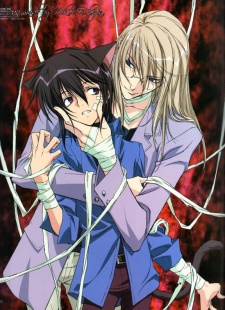
Loveless - Review


From the point of view of a guarded Western, Japanese sensibility towards paedophilia and incest (predominately sibling incest) is almost akin to entering another world. The subsequent expression of idealistic and erotic ‘beautiful boys in love’ is known as the Shonen-ai (boy-love) genre. Loveless is one such confusing and uncomfortable anime, introducing a potentially paedophilic relationship between protagonists Ritsuka (12 years old) and Sobi (21 years old). This certainly raises the issue of appropriateness (not to mention several hairs on the back of my neck). Nevertheless Loveless is primarily concerned with the loss of innocence in the symbolic sense rather than the physical.

Ritsuka comes from a troubled background. His elder brother Seimei was recently and horrifically murdered, his personality has radically changed, and he suffers memory loss and has an abusive mother steadily becoming unhinged to the point of denouncing Ritsuka as her son. This leads Ritsuka to experience insomnia and social anxieties that require him to meet with a therapist. This is a rather excellent rendition of grief and family turmoil after a significant loss. Having a child come to terms with the reality of death is perhaps the most traditional but also momentous method of losing the innocence of childhood. Loveless is largely concerned with reintegrating Ritsuka, with his growth and self-discovery.

Sexuality and intimacy are subservient but imperative themes. Loveless takes place in an alternative world, inhabited by kemonomini- humans possessing cat-like features (ears and tails) as an open display of their virginity. These features will be lost after their first sexual encounter, acting as a visual separation between adults and children. With regards to the relationship between Ritsuka and Sobi, there is an element of mentorship rather than lover (keeping with the tradition of which this springs from). Sobi’s love for Ritsuka does not come from genuine desire or attraction. Instead it is the express command of his former master Seimei. In this way we can view Sobi as a surrogate brother, an anchor of support rather than a sexual predator (sort of). Though Sobi is portrayed as non-threatening, it’s hard to get around his most inappropriate actions such as outright kissing Ritsuka.

The storyline is one that is intrinsically complicated. On the one hand there are some great fantasy elements with the notion of true names binding people (typically same-sex couples) as fighters and sacrifices (soul-mates in effect) and are trained at a secret school to do battle with one another. While this might give the impression of a rich, multi-layered concept, it should be made clear that none of these elements are nearly fleshed out enough to be satisfactory. This is certainly understandable considering that the manga had only published four volumes at the time the anime was released. Still it does limit the overall enjoyment as Loveless never reaches a gratifying conclusion of any kind. To make matters worse the last episode reveals a shocking revelation regarding the death of Seimei. Needless to say this is a tad frustrating.

Regardless there is something about Loveless, something beautiful, something captivating that will mesmerize its audience and make them want to learn more about this strange little world. Well, so long as they can overlook the creep factor.

Rating: 7/10

For Fans of: Kuroshitsuji, Gravitation, Yami no Matsuei 

Sunday, 29 April 2012

First Impression DC vs. Marvel


Young Justice Invasion 

It’s no secret that I’m not a DC girl. For me, DC tends to miss the mark more often than it hits it. The same is true for their animation. Aside from Batman the Animated Series which is sheer awesome and the comedic anime-styled Teen Titans, I’ve not given DC a second glance. I do remember watching Justice League, later Justice League Unlimited as a kid and being unimpressed with the level of corniness. Then along came Young Justice and it was finally a show that DC seemed to have the right balance of silliness and maturity. Despite a relatively young cast, the show was surprisingly dark (in comparison to other superhero shows comprising of teenagers – Teen Titans or X-Men Evolution for example). The original season was clever, concise and had plenty of character development. The second series is a different matter.

Season two is set five years after the events of the season one finale (which only aired last week). Not that this is made clear as to why, it’s only briefly referenced by Batman. So in the initial episode we learn that Kid Flash, Artemis, Red Arrow and Aqualad are no longer part of the team. Wow, I mean that could be quite a kick to the teeth to their fans. Zatanna and Rocket have also left but we still do see them briefly as members of the Justice League. Replacing them are Robin (Tim Drake), Blue Beetle, Beast Boy, Batgirl, Wonder Girl, Bumblebee and Lagoon Boy. Disappointingly none of these new characters actually makes an impression, their personalities pale in comparison to the original cast. Whereas season one gradually introduced its protagonists and even continued to expand up until the very end, season two completely jumps the shark by creating an entirely new line-up. Of course the biggest frustration is the break-up of Superboy and Miss Martian. During the original series their relationship was crucial to either character in order to gain stability and strength and ultimately to be able to accept themselves. It’s seems almost undignified that they should break-up off screen. Or that Miss Martian should be with Lagoon Boy (already top of the annoying list). I suppose the writers wanted the inevitable Superboy/Wonder Girl hook up to be less complicated.

In all, Young Justice: Invasion sure does have its work cut out. I mean in order to forgive tossing away five freaking years; it has to pull something beyond amazing out of its hat. I feel the need to explain to DC that fans get attached to characters. And fans don’t like change. We like characters with interesting personalities and experiences and we like watching them grow throughout the course of a series. We don’t like them being expendable or interchangeable.

Initial rating: 6/10


 The Avengers: Earth’s Mightiest Heroes.

Much like Young Justice, The Avengers had a killer first season with subtle hints towards an alien invasion in the next season. Unlike Young Justice, The Avengers is smart enough not to uproot its prior cast for an entire new one. Instead new characters/members are gradually introduced, notably Ms. Marvel, making her the second female to join the team, progress!

The second season spares no time in plunging the team into a new conflict with a new villain, none other than Dr. Doom. As well as introducing a new alliance, the Fantastic Four. The following episodes are primarily filler, exploring possible future story arcs, for example Maria Hill discusses superhero registration which would unavoidably lead into the notorious civil war scenario. The strength of The Avengers is in its awareness for what fans want to see. It doesn’t overload us with too many characters resulting in extended cameos, it takes its time to start on a smaller scale and build around the primary cast. This obviously allows certain characters – Iron Man for example more screen time, but more importantly is that it allows other characters the opportunity to develop within their own stories and solo adventures. For instance, Thor has not yet returned to Midgard, yet we have seen him and are aware a big bad Asgardian villain will pop up some time in the future. This is why I think Marvel has the upper hand as the creative staff seem to know less is sometimes more.

Initial Rating: 8/10 

Tuesday, 24 April 2012

First Impression: The Legend of Korra


Technically Avatar the Last Airbender and its successor The Legend of Korra are not strictly speaking animes since neither are Japanese, but what is transparently clear is the inspiration behind both is. No surprise Avatar has been dubbed the American Anime.

 Set several unspecified years after the events of the original series with the primary cast presumably dead, so far the only member of the first series we know for sure is alive is Katara, as she quite literally passes the torch to the new avatar, a water tribe girl called Korra. Existing in a time of alleged peace, Korra has a completely different task ahead of her, finding her place in the world as the Avatar. It’s really interesting that whereas Aang had a destiny that he was trying to avoid, Korra is without a destiny despite really wanting one. This leads her character to make impulsive and often ill-thought out plans. Despite Korra’s ever so slight arrogance in her abilities and her title, the writers have done a brilliant job of not making her an annoying teenager trope. It could have so easily gone horribly wrong. However the greatest aspect of this new series is without a doubt the bad guy and his anti-bending movement. In this modern era the warfare of Avatar the Last Airbender is not just seemingly outdated, it is also a hindrance, resulting in the scapegoating of benders as the problems of the society. The Legend of Korra has the potential to be a more in depth, more historical commentary than its predecessor but at the moment I’ve not given into Korra fever. In its defence The Last Airbender had three terrific seasons. It’s too soon to decide whether Korra is on par yet.
 

Initial rating: 8/10


Monday, 28 March 2011

Dragon Crisis! Review

As far as light-hearted, romantic-harems go, Dragon Crisis doesn’t set out to achieve more then it physically does. What do I mean by that? Simply put, priority has been placed on producing as much pre-teen sickly sweetness as possible, rather than attempting expand the already overpopulate genre in terms of depth and innovation. Dragon Crisis doesn’t pretend to be anything more than a sit-back-and-switch-off show. At least it’s honest.

Dragon Crisis opens with a classic, the magical-girl-in-a-suitcase scenario, a red dragon named Rose. Rose appears to know Ryuji and is fanatical about him, shifting the plot focus onto the antics of living with a girl-dragon with the mind of a two year old. Sure it’s funny but it completely bypasses giving a credible explanation for why Rose was in the suitcase to begin with. From start to finish Dragon Crisis prefers to distract the audience with the big picture, the Ryuji and Rose affair, rather then taking the time to fill in the small but gapping plot holes. This half-arsed approach prevents it from excelling.

There is one main arc to open and close the show, featuring the one and only major villain, whose actual motive seems particularly disincentive, not to mention a tad clichéd. Other then being required to as the primary antagonist and for the sake of the plot, there is no real reason for him to be interested in Rose. If Onyx knows something about red dragons we don’t, isn’t the finale the place to say it? Unfortunately most characters also suffer from acting out of convenience rather then of their own accord. Unsurprisingly this is a commonplace problem when you try to shoehorn a formula.

The middle consists of several sub-stories, primarily to connect another magical girl into Ryuji’s life. This introduction process starts to become tiresome pretty quickly, considering most characters tend to resort to the same tactic of attacking Ryuji first, asking questions second. The show is almost incapable of progressing without (literally) dropping a magical girl into our laps. In a sense there is no real commitment, just a series of half-hearted attempts to expand the cast and ultimately Ryuji’s harem. This is just sloppy storytelling, pure and simple.

In addition, the fact that Ryuji even has a harem gets increasingly difficult to swallow. As the leading male, in theory there should be plenty of room for him to grow as a person. Initially Ryuji is blander then a beige dishtowel and somehow manages to maintain the same level of dullness throughout the show. The only female fancy that feels halfway believable is that of equally drippy classmate, Misaki, but even this crush feels staged when Misaki recalls her first encounter with Ryuji and most treasured memory. While an explanation is later given for Ryuji ‘magnetic’ personality, it seems to cover dragons but not humans nor the wolf girl, so it’s hardly concrete. Interestingly this concept is actually quite appealing, but frustratingly before it’s even given a chance to develop, it’s immediately rejected in the next episode. The writing on this show is such a big flop.

Obviously the main romantic couple are Ryuji and Rose, despite having zero chemistry. For a large portion of the show, their relationship appears entirely one sided, while Ryuji appears to humour Rose and her constant declarations of love, yet regarding them with some embarrassment. Although a male teenager, Ryuji is unduly chaste, never showing romantic interest in any of the growing number of girls flocking towards him. Until the finale that is, when the plot needs him to man up and kiss Rose. Honestly the entire show has been so formatted that even the inevitable couple feels clinical and contrived.

Dragon Crisis is enjoyable, especially if you like light-hearted, fluffy anime that ultimately doesn’t go anywhere. Its fun, it’s bright and it’s cheerful, so there is potential to be easily drawn in. However the overall premise suffers from lack of sufficient thought, planning and of course, creativity. This is entirely a surface anime, what you see is entirely what you get – one long cliché. As long as you go in knowing this, you won’t be too disappointed.

Rating: 5/10

Friday, 25 February 2011

First Impression: Yumekui Merry


Yumekui Merry (or Dreameater Merry), a tale about a guy, Fujiwara Yumeji who has the power to view auras who meets a girl, Merry Nightmare, a dream demon stuck in reality for the past ten years. Considering this is your typical magical girl meet average guy plot, Yumekui Merry is surprisingly well thought out. Especially when compared to other animes this season, namely Dragon Crisis and Kore wa zombie desu ka? For instance, Merry does not automatically fall in love with Yumeji, nor invade his house while treating him like garbage, or indeed any such cliché. Not to mention that whereas in those other animes, the “protect the girl” scenario is more or less forced onto the male protagonist, in Yumekui Merry, Yumeji seems to genuinely want to help Merry find her way home. Usually I’m a bit down on male leads since they tend to be a little lacklustre but Yumeji Fujiwara is a good character shaping up to be a great one. In all, this is fantastic. Exactly how anime should be.

Rating: 8/10


Friday, 4 February 2011

First Impressions: Dragon Crisis!

Dragon Crisis!

Cute dragon girl has whiny teenage boy fixation!


I should have reviewed this one long before now, my bad. Or rather it’s the anime’s bad. Dragon Crisis is just dumb. It’s a clichéd hand-me-down series, absolutely no thinking required. Yet, I kinda like it, especially after episode three (no spoilers). Dragon Crisis doesn’t pretend to be any more then it is, light hearted and fun. As for the characters themselves, they vary. Ryuji is your standard, generic, angst ridden tween with two girls digging him (don’t ask me why), Rose is perfectly adorable and annoyingly obsessed kid sisterish rolled into one fire breather. While cousin Eriko seems to be plugging the fan service element of the show. In all, the plot hangs very loosely amongst terms “breaker/brokers”, “lost precious” with very little substance and gapping plot holes such as why Rose was hiding in a suitcase to begin with. Hopefully the anime can be executed neatly and even rise above its initial impression.

6/10

Sunday, 9 January 2011

Shrinryaki! Ika Musume Review


Given the opening platform of Shrinryaki! Ika Musume (Squid Girl), the environmental awareness theme is surprisingly less prominent than anticipated. Rather it serves as a humorous backdrop for the series title and showcase character, an unwavering, adorable human girl shaped squid, known simply as Squid Girl. In effect, Shrinryaki! Ika-Musume is a light-hearted comedy which focuses keenly on the depiction and antics of a squid out of water. Overall, this is a genuinely funny show.

Squid Girl's appeal is in her nativity, she persistently demonstrates limited knowledge of humanity - believing the population is only 1000, and its customs - not understanding the significance of a birthday celebration, to exhibiting childlike fascination towards everyday tools such as umbrellas. Coupled with a string of weird and wonderfully squiddie powers, which present for outlandish yet destructive situations, its pretty clear that Squid Girl's original plan for world domination won't amount to much by the end of episode one. Instead we are treated to generous amounts of action, brandish under a lavish, imaginative concept. A scenario so bizarre, no one need question it.

Each episode is separated into three morsel bite size slices, steadily introducing a supporting cast of whimsical characters who reoccur throughout the series. Some good, some strenuously unspectacular. Eriko Aizawa strikes up a reluctant relationship with Squid Girl as her bothersome kid sister archetype, which feels both genuine and provides some touching moments. Whereas local stalker Sanae's unhinged, masochistic obsession with (lets face it) a squid, quickly becomes repetitive and stale. However when compared to the American scientists/three stooges team, who are just plain annoying, suddenly all is forgiven. Still, there were a few characters that when under the radar, the lifeguard, Gorō Arashiyama for example, that could have benefited from being a little more polished.

Ultimately Shrinryaki! Ika Musume wraps itself up with a substandard finale, one that just seems pointless and plumb inconsequential to the story overall, other then just reconfirming what the audience have already worked out for themselves. Nevertheless a poor ending does little to damper the undeviating levels of easy going amusement that this show specializes in. Its this lively, fresh and absolutely adorable approach that encourage the viewer to simply switch off, sit back and enjoy. 100% aquatic gold.

Rating: 7/10

Wednesday, 29 December 2010

Black Butler II Review


The first season of Kuroshitsuji consisted of 24 episodes, primarily filler arcs, mere padding for the main storyline which turned out to be somewhat of a flop. It was unambitious and tenuously held together, yet there is a slight eerie charm to the vibrant exhibition of characters that overall makes the series enjoyable. Kuroshitsuji II attempts to rectify some of the shortcomings of its predecessor while remaining on par in terms of entertainment. Bottom line, its a complete success. Season two is much shorter, more direct and feels more fluid. In all, a welcomed improvement.

Initially I thought season two was going to feature a brand new master/demon butler couple, which I had high hopes for considering I genuinely do not like Ciel Phantomhive. There's something about his character that I've always found just too convenient for the plot, granted there wouldn't be much of a plot without him, this becomes disappointing clear during the course of Kuroshitsuji II. Nevertheless it was interesting to watch the dynamics of Alois Trancy and Claude Fauste unfold. While equally as damaged as Ciel, Alois is mentally the polar opposite, ever on the verge of a breakdown and psychotically dependant on his butler. Sure this means that his position as a flamboyant villain is short lived and untimely overshadowed by Claude's master scheme. To be honest, its a tad obvious what Claude is up to, not a particularly deep motive either. Then again, I don't suppose it has to be for type of anime.


Once again, its the supporting cast that truly brings Kuroshitsuji to life. Satisfactory amounts of homo reaper, Grell Sutcliffe are more than enough to meet my seal of approval. Observing his infatuation with Sebastian progress into a potential friendship, based on Grell's inclusion in the goodbye ceremony at the end of episode 12 would seem to imply that he is no longer considered just a nuisance, was simply hilarious. Sometimes all it takes is one well crafted comic relief character to break up an otherwise starchy show.

The finale delivered a wonderfully fiendish twist, executed superbly against the ever present foreboding peril of which Ciel places himself in. Much more captivating and consistent than its predecessor and nicely leaves the door wide open for a third season. I'm sold on this show so fingers crossed there will be one.

6.5/10

Thursday, 16 December 2010

Occult Academy Review


Seikimatsu Occult Gakuin, or Occult Academy became one of my favourite anime, literally overnight. The entire 13 part series was devoured in a mere 48 hour slot, much to my glee. Indeed it was short, but it managed to remain on point without needlessly bloating out the story, as well as providing a neatly wrapped ending. Well written, well planned and well balanced, Occult Academy is certainly going to be one of the highlights of 2010.

Set in the year 1999 at Waldstein Academy, conveniently dubbed 'Occult Academy', the story centres on Kumashiro Maya, the daughter of the recently deceased Headmaster of whom's funeral she has arrived to attend. One demon incantation later and Maya is forced to slay her possessed father's corpse, all the while protesting that belief in the Occult is entirely fraudulent. Which seems a little counter productive considering the situation at hand and in later scenarios, yet this little oversight aside, it appears more of a defensive mechanism on her part then actual disbelief/disillusion.

As the first episode draws to a close, Maya reveals her true intentions for returning - to destroy the school, and essentially undo her Fathers life works. This premise alone could have a made a good show yet ultimately doesn't really go anywhere, when the second and more foreboding storyline is introduced during episode two. Time traveller Fumiaki drops in (no pun intended), announcing the impending alien invasion plot twist, stifling Maya's plans for revenge straight out.

However, despite the initial blitz of action/adventure/decapitation of the first episode, the rest of the series is quite slow paced. Separated into two episode arcs, various paranormals topics are addressed in either threatening (monsters, demons and mages), or non-threatening (crop circles, ghost children and near death experiences) but overall a seemingly subdued approach. Occult Academy never submits to the murky paranormal depths as deeply as it could, thus abandoning some potential as a result. At the same time it is the balance between subtle fantasy and the focus on character development that gives this show a likeable charm. The portrayal and execution of Maya and Fumiaki showed two regular people trying to come to terms with ordinary problems, Maya trying to understand her deceased Father, and Fumiaki trying to discover himself, all within an extraordinary setting.

All in all, Occult Academy presents a fresh, innovative take on supernatural fantasy with superb, nearly flawless production. The animation is wonderfully done, sleek and stylish, for no other reason, its worth watching for that factor alone. Nevertheless the series has one minor struggle, in that it is not 'occult' enough. The paranormal element isn't constant throughout the series, it drops off the radar during the middle only to surge into a spectacular smack down during the ending. A more cohesive approach wouldn't have hurt, but really its only a small complaint. One that won't prevent Occult Academy from become an (oc)cult classic.

Rating: 7/10